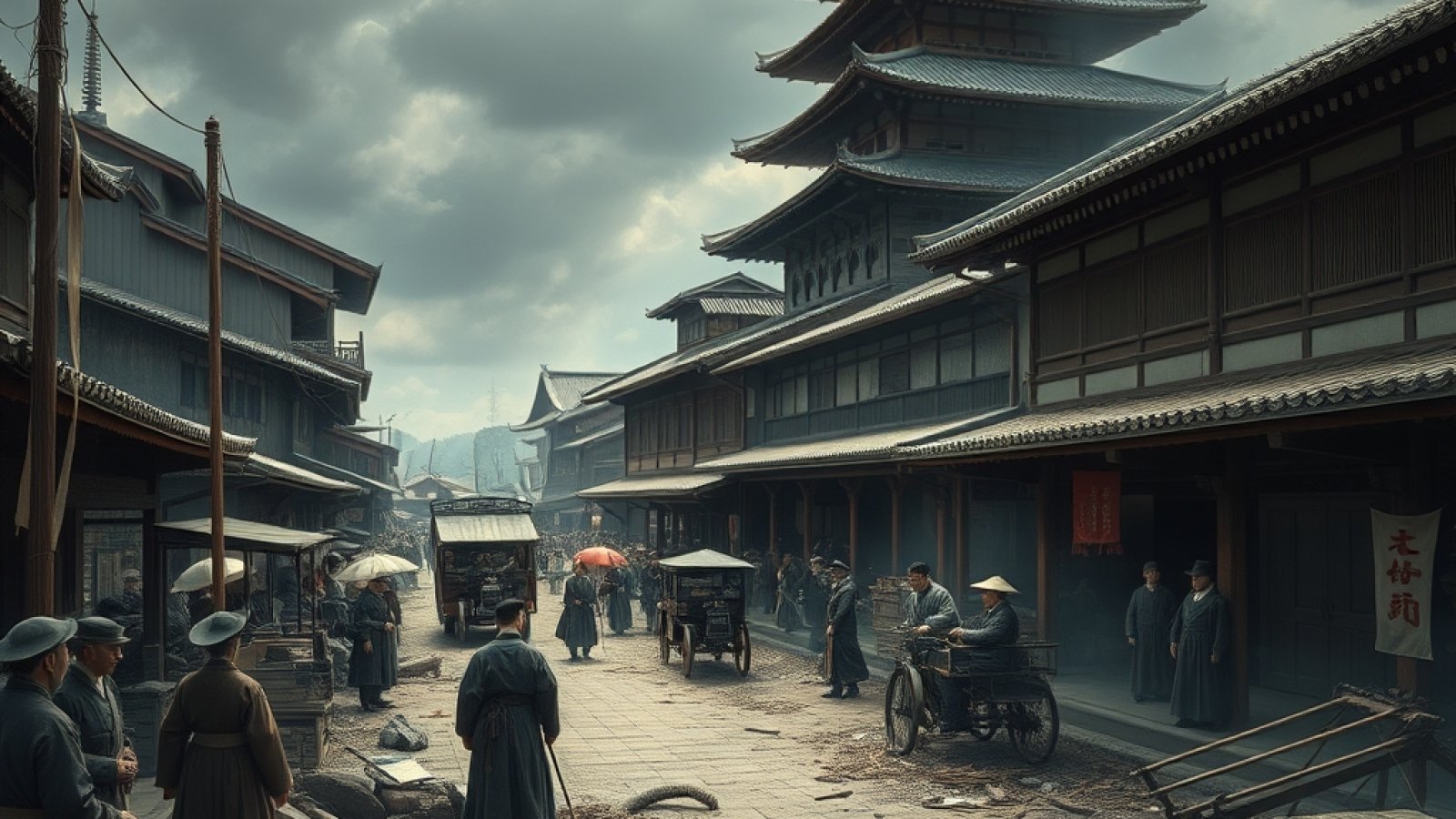
The Ansei 1855 earthquake occurred at 22:00 local time, on November 11, in the Edo region, now known as Tokyo. With a magnitude of 7.0 on the surface wave scale and an intensity of XI on the Mercalli scale, this earthquake caused a severe shock that triggered a major fire in the Kantō area. As a result, it is estimated that 7,000–10,000 people died and around 14,000 buildings were destroyed, including houses, temples, and Edo Castle.
Background
The Kantō region is located above the complex convergent boundary between the Pacific and Philippine Sea plates and the Eurasian and North American plates. Earthquakes in this area can occur at various layers, including the interface between the Eurasian and Philippine Sea plates. Previously, in 1854, the Nankai earthquake increased the pressure on the geological system of the region.
Since the Edo period, the city of Edo had not experienced a major earthquake for about 154 years, so the city's infrastructure consisted of brick and stone buildings with light structures. Many densely populated areas were built on unstable alluvial mud, increasing vulnerability to earthquakes. This condition made the city unprepared to face an earthquake as severe as the Ansei.
When the earthquake occurred, widespread fires were caused by easily flammable buildings and poor water drainage systems. In addition to the earthquake, small tsunami waves were also recorded, although they did not cause significant damage.
Event Progression
The earthquake triggered 78 aftershocks in the first month after the main event, indicating intense seismic activity. Major buildings, including Edo Castle, suffered severe damage, forcing shogun Tokugawa Iesada to seek temporary shelter in Fukiage Garden.
Among the victims were high-ranking officials such as Karo Toda Chudayu from the Mito Domain, who died as a result of the earthquake. Another leader, Nanbu Toshigo from the Morioka Domain, was also injured. This event exacerbated internal conflicts in the Mito Domain, leading to the Sakurada Gate Incident in 1860.
Economic disruption also increased as the shogun had to allocate funds to help the victims, increasing the shogun's financial burden and worsening the fiscal crisis at the end of the Tokugawa period.
Social and Political Impact
After the earthquake, more than 400 Namazu-e prints appeared within a few weeks, depicting the damage and public anger towards the god Kashima. These prints marked a symbolic shift towards the sun goddess Amaterasu and expressed dissatisfaction with the feudal system.
The earthquake and other disasters in 1854–1855, including cholera outbreaks and the 1858 Hietsu earthquake, added to the social burden. As a result, the government changed the era name in 1860 to mark a new beginning and increase the "luck" of the people.
This event also highlighted the city's limited preparedness for disasters, prompting reflection on the importance of earthquake-resistant building structures and fire mitigation in the future.
Long-Term Influence
The Ansei 1855 earthquake is considered one of the largest disasters of the Edo period, influencing the policies of reconstruction and urban planning of modern Tokyo. The extensive damage prompted a rebuild with stricter structural standards.
In the context of Japanese history, this earthquake became an important part of the series of "Ansei Great Earthquakes" along with the 1854 Nankai earthquake and the 1854 Tōkai earthquake, which collectively marked a period of social and political crisis.
This event also became an important example in the study of Japanese seismology, as it focused attention on the complexity of the plate boundary in the Kantō region and the importance of future earthquake monitoring.
This article was automatically compiled by the HISTORYX Editorial Team from Wikipedia data licensed under CC BY-SA 4.0 on November 11, 2026. Corrections can be sent via the Contact page.



Discussion
Comments
Comments are reviewed by an editor before they appear. Include sources when correcting facts.
No comments yet. Be the first to respond to this article.