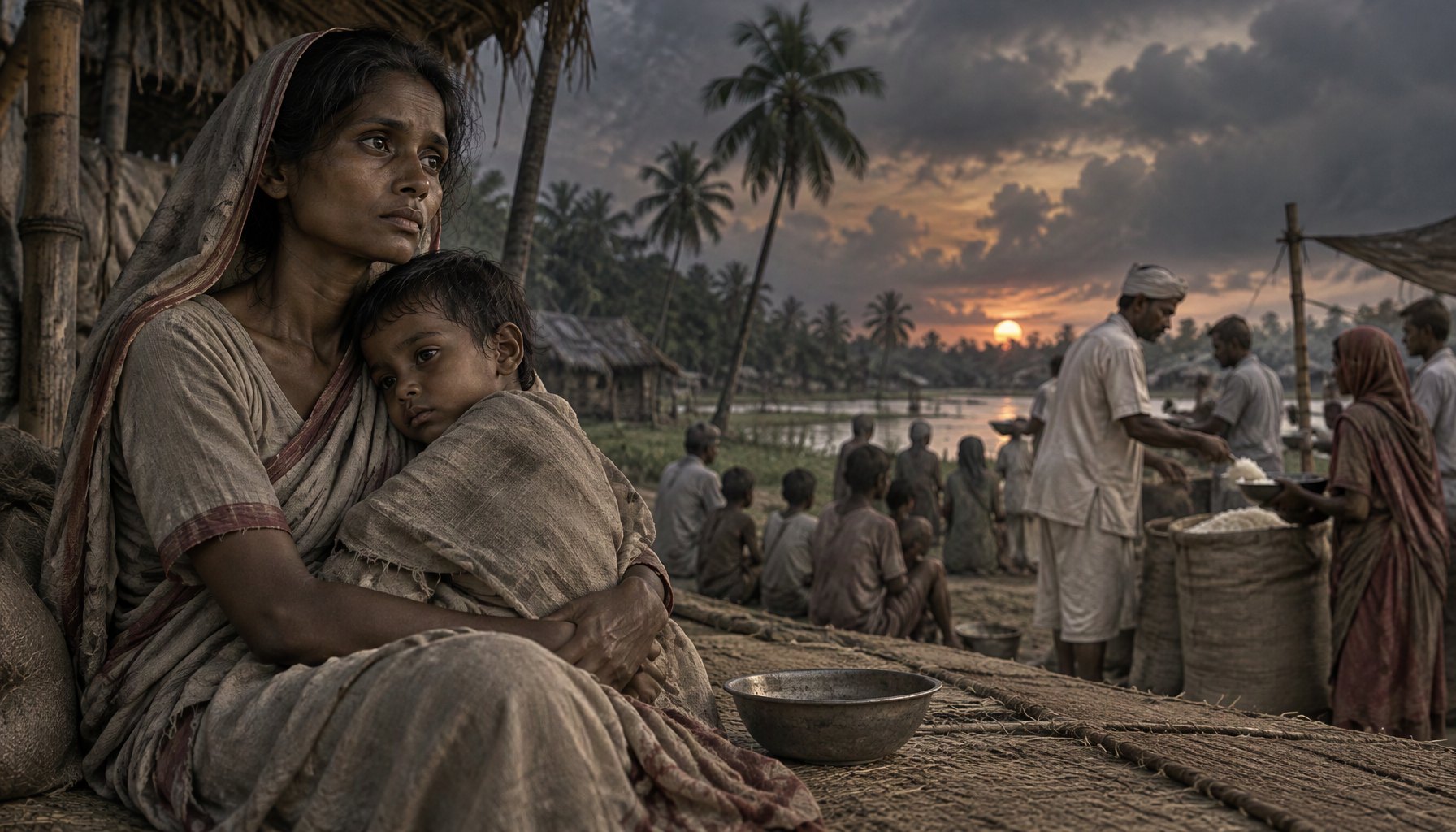
Bengal Before the Famine
Bengal was a fertile region in the east of British India, with rice farming as the backbone of the economy. Before World War II, the area was relatively able to meet its own food needs. However, the majority of the population lived in poverty and were highly dependent on stable rice prices.
Social and economic disparities had long been an issue. Small farmers, agricultural laborers, and city workers often did not have sufficient savings to cope with rising prices. When disruptions occurred, the poorest groups were the first to be affected.
War and Rice Loss
In 1942, Japan occupied Burma, which had previously been a source of rice imports for Bengal. At the same time, Allied forces in India required large quantities of food supplies. Military needs, refugees from Burma, and transportation disruptions increased the pressure on rice reserves.
The colonial government also implemented a "denial" policy in coastal areas, which involved the removal or destruction of boats and food supplies to prevent them from falling into Japanese hands in the event of an invasion. This policy reduced local access to food sources and transportation, although its impact is still debated by historians.
Colonial Policies
The British Indian government faced a dilemma between war needs and the welfare of the population. Priority was given to military supplies, major cities, and strategic areas. Price control and distribution were not effective, while colonial bureaucracy was divided between the central government and the provinces.
The Bengal government and the central government blamed each other. Delays in acknowledging the scale of the crisis worsened the situation. Foreign aid and assistance from other regions of India arrived too late, and inter-agency coordination was unable to match the speed of the expanding crisis.
Prices, Speculation, and Access
Famine was not caused solely by an absolute food shortage. Access to food also collapsed due to soaring rice prices. Speculation, hoarding, and market disruptions made rice unaffordable for low-income groups. In some areas, people had money but could not buy food.
Economist Amartya Sen later used the Bengal famine as an important example to explain that famine can occur without a drastic reduction in food production. What failed was society's ability to access food through markets, wages, and distribution networks. This approach changed the way experts understood modern famine.
People's Suffering
Millions of people fled to cities like Calcutta in search of food. They lived on the streets, train stations, and emergency camps. Diseases such as cholera, malaria, and dysentery spread rapidly amid a lack of clean water and sanitation.
Deaths from starvation and disease are estimated to have reached 2 to 3 million people, although the exact number is difficult to determine. Families lost children, parents, and productive members. The social and psychological impact of the famine lasted long after the crisis ended.
Aid and Response Failures
By the end of 1943, the colonial government began sending food aid and opening public kitchens. Governor-General Archibald Wavell played a key role in changing priorities and increasing supplies. Aid from the military and international organizations helped alleviate the crisis, but could not save all the victims.
The Bengal Famine Inquiry Commission established in 1944 concluded that the famine was caused by a combination of food shortages, distribution failures, and government policies. The report criticized the slow response and lack of coordination, but did not fully acknowledge the political responsibility at the highest level.
Historical Debate
The debate about the Bengal famine continues. Some historians emphasize the role of Winston Churchill's policies and the British government, including war priorities and the shipment of rice to other regions. Others emphasize environmental factors, war disruptions, and the failure of local government in India.
What is clear is that the famine cannot be explained solely by crop failure. Political policies, unfair distribution, and the inability to protect vulnerable groups played a major role. This case is a lesson on how political decisions can determine the lives and deaths of millions of people.
Memory and Lessons
The Bengal famine rarely received as much attention as other disasters of World War II, but its impact was immense. In India and Bangladesh, memories of the famine remain alive in family stories and literary works. Historians continue to delve into archives to understand the responsibilities and mechanisms of the crisis.
For the world, the Bengal famine shows the importance of a fair food system, price transparency, and social protection for vulnerable groups. Famine is not just a production problem, but also a problem of power, access, and policy. This lesson remains relevant today.
Discussion
Comments
Comments are reviewed by an editor before they appear. Include sources when correcting facts.
No comments yet. Be the first to respond to this article.