Roots of Apartheid
South Africa was formed in 1910 from the union of British colonies and Boer republics. From the beginning, the country implemented restrictions on black inhabitants regarding land ownership, political rights, and mobility. In 1948, the National Party won the general election and made racial segregation a systematic national policy.
The system was called apartheid, which means "separation" in Afrikaans. The government reinforced the separation of residential areas, education, employment, and access to public services. Inhabitants were classified into racial groups, and their rights were determined by this classification.
Racial Legal System
Several laws became the backbone of apartheid. The Population Registration Act of 1950 mandated racial registration, the Group Areas Act of 1950 divided areas for specific racial groups, and the Prohibition of Mixed Marriages Act of 1949 banned interracial marriages. The Bantu Education Act of 1953 limited education for black children.
Pass laws required black inhabitants to carry permit documents when in areas designated for whites. Violations could result in arrest. The government also formed "homelands" or bantustans, areas intended to separate black inhabitants from economic and political centers.
Resistance
The African National Congress (ANC), founded in 1912, became one of the main organizations in the struggle against discrimination. In 1952, the ANC and its allies launched the Defiance Campaign, a civil disobedience campaign against apartheid laws. Thousands were arrested, but the campaign raised mass political awareness.
In 1955, anti-apartheid groups adopted the Freedom Charter, a statement calling for a democratic and non-racial South Africa. The government accused activists of being communists. In 1960, the Sharpeville massacre occurred when police shot demonstrators, killing 69 people. The event sparked international outrage and accelerated the shift to armed struggle.
Mandela and the ANC
Nelson Mandela, a lawyer and ANC activist, became one of the leaders of the struggle. After the ANC was banned in 1960, Mandela and his colleagues formed the armed wing Umkhonto we Sizwe. In 1963, he was arrested and tried in the Rivonia Trial. In 1964, he was sentenced to life imprisonment.
Mandela spent 18 years on Robben Island and was later transferred to other prisons. While in prison, he became a symbol of resistance. Outside prison, the anti-apartheid movement grew both domestically and internationally. Trade unions, student organizations, and churches played important roles in the resistance.
Crisis of the 1980s
In 1976, the Soweto uprising erupted in protest against the use of Afrikaans in schools. Police shot at the students, and violence spread throughout the country. In 1977, Black Consciousness leader Steve Biko died in police custody, sparking international condemnation.
In the 1980s, the government faced economic crisis, international sanctions, and increasing domestic resistance. President P.W. Botha introduced limited reforms but still refused full political rights for black inhabitants. A state of emergency was declared, and thousands of activists were detained without trial.
Release in 1990
On February 2, 1990, President F.W. de Klerk announced the lifting of the ban on the ANC and other anti-apartheid organizations. He also announced the release of Nelson Mandela. On February 11, 1990, Mandela walked out of prison after 27 years, greeted by masses and worldwide media attention.
Negotiations began but proceeded with difficulty. Political violence continued, including clashes between ANC supporters and the Inkatha Freedom Party. The assassination of communist leader Chris Hani in 1993 nearly derailed the peace process. Mandela appeared to calm the masses and continue negotiations.
Transition in 1994
In 1993, the government and the ANC agreed on an interim constitution guaranteeing political rights for all citizens. Mandela and de Klerk received the Nobel Peace Prize the same year. The first general election open to all races was scheduled for April 1994.
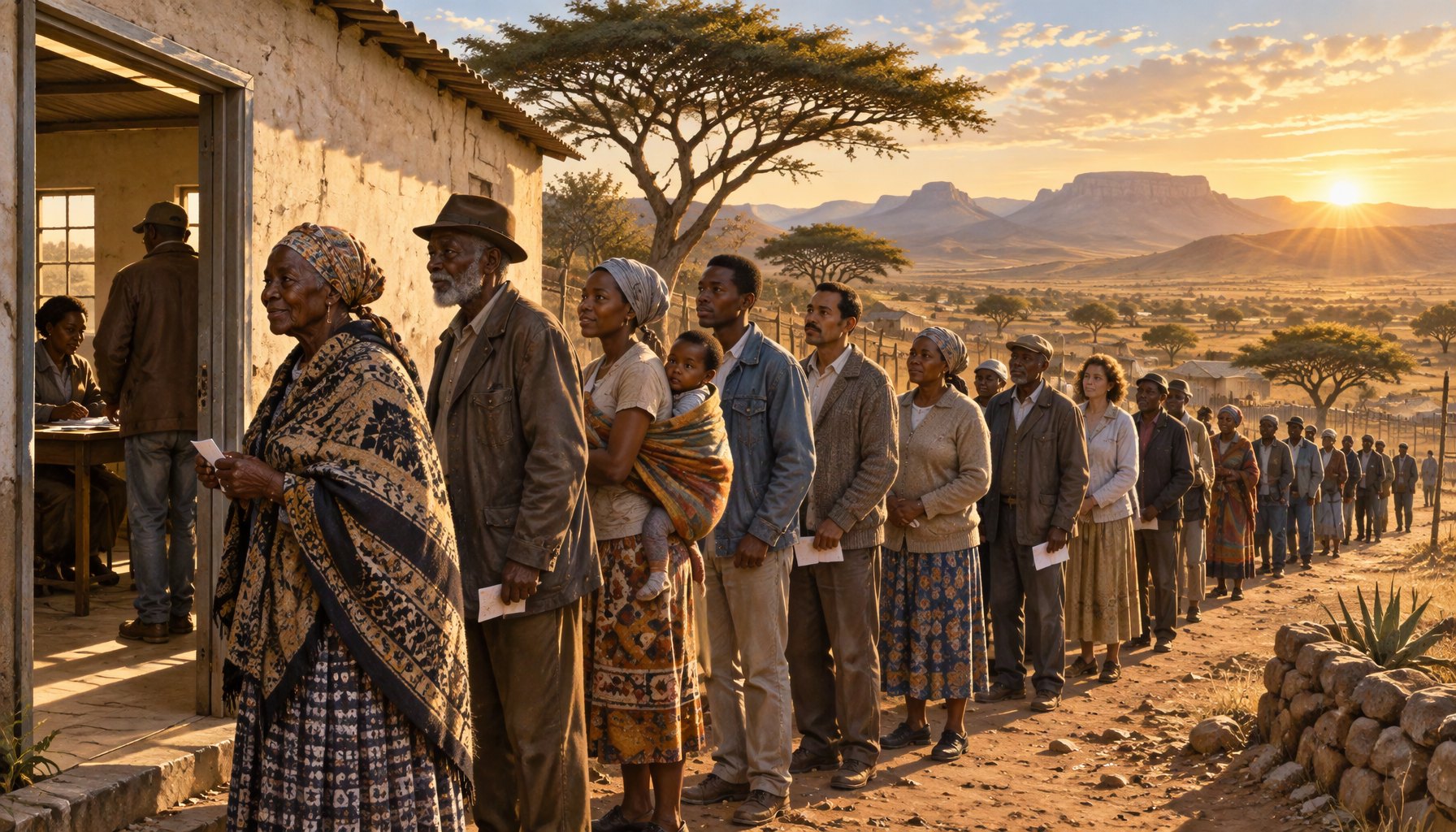
The election took place on April 27, 1994. The ANC won a majority of the votes, and Mandela became South Africa's first black president. A national unity government was formed, with de Klerk as vice president. The Truth and Reconciliation Commission was later established to uncover human rights violations during the apartheid era.
Legacy
Apartheid ended legally, but its legacy did not disappear overnight. Economic disparities, land ownership, unemployment, and educational gaps remain significant. Many black communities still live in poverty, while wealth is concentrated among a small portion of society.
South Africa is subsequently known for the idea of a "rainbow nation," an image of diversity and reconciliation. However, debates about economic justice, corruption, and the meaning of transformation continue. The story of the end of apartheid shows that political change can be achieved through pressure, negotiation, and bold leadership.

Discussion
Comments
Comments are reviewed by an editor before they appear. Include sources when correcting facts.
No comments yet. Be the first to respond to this article.