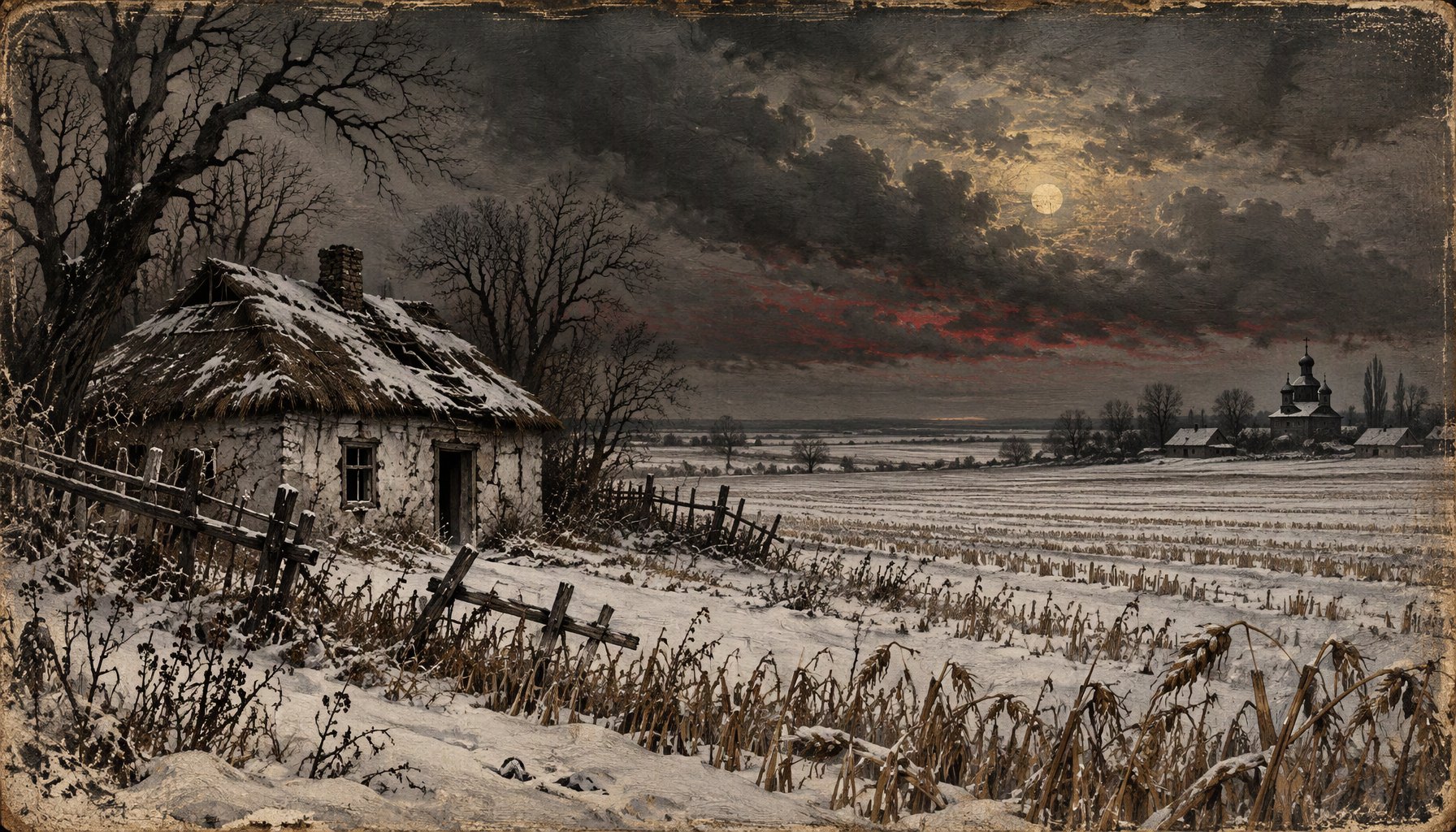
A Famine Beyond Natural Disaster
In the early 1930s, the Soviet Union implemented an agricultural collectivization program. Farmers' land, livestock, and production tools were forcibly integrated into kolkhozes, collective agricultural cooperatives. Those who refused were labeled kulaks and deported or stripped of their property. This policy destroyed the family farming system that had been the backbone of food production in Ukraine for centuries.
The crisis was exacerbated by extremely high procurement targets for sugar and grain. In 1932, the state sent procurement brigades to villages to seize harvests in excess of the farmers' capabilities. The government was aware that famine would occur, but continued the seizures.
From Collectivization to Mass Famine
In August 1932, the Soviet government enacted a law popularly known as the Law of Three Ear Spikes, which imposed severe penalties, including the death penalty, for the theft of state property. The law was used to criminalize farmers who took remnants of the harvest from their own fields.
Villages deemed to have failed to meet targets were placed on a blacklist. For these villages, supplies were cut off and all debts and taxes had to be settled immediately. By the end of 1932, the government introduced an internal passport system and a ban on leaving the area. Ukrainian farmers were unable to flee to find food.
Witnesses and Foreign Coverage
In March 1933, Welsh journalist Gareth Jones managed to enter Ukraine without permission and visited several villages. He reported widespread famine and suicides due to despair. His report was dismissed by some foreign journalists in Moscow, including Walter Duranty of The New York Times, who reported that the crisis was exaggerated.
Malcolm Muggeridge of Manchester Guardian also wrote about the famine after witnessing the conditions firsthand. The contradiction between the accounts of the witnesses divided the Western public. Many only accepted the scale of the disaster after the Soviet archives were opened in the 1990s.
How Many Died
Historians estimate that between 3.5 and 5 million people died in Ukraine in 1932–1933 due to famine and associated diseases. The figures for the entire Soviet Union, including the Volga region, the North Caucasus, and Kazakhstan, are higher. Discrepancies in the numbers arise due to incomplete population records, many unrecorded deaths, and differing definitions of the famine period.
There is no single official figure. However, there is no serious debate that the policies of the Soviet state were the primary cause of this disaster. Crop failures and weather did occur, but political decisions ensured that food continued to be taken from famine-stricken areas.
Was This Genocide?
Ukraine recognized the Holodomor as genocide in 2006. The European Parliament, several countries, and many historical organizations also use this term. The main argument is that the policies of food seizure and the ban on leaving the area specifically targeted Ukrainian farmers and resulted in mass death.
However, some historians and governments, including Russia, reject the genocide label because the famine also affected other groups in the Soviet Union and there is no single document proving the intent to destroy the entire Ukrainian nation. This debate continues. What remains unchanged is the suffering of millions of people and the role of state policy in creating it.
Remembrance and Recognition
In Ukraine, the Holodomor is commemorated every fourth Saturday in November. Monuments and museums have been built in Kyiv and various cities. In 2008, the European Parliament recognized the Holodomor as a crime against humanity and called for the opening of the archives of the former Soviet state.
Archives opened after 1991 reveal letters from officials, procurement reports, and instructions proving that the central government was aware of the famine. For many Ukrainian families, this story was passed down orally for decades before finally finding a place in official history.



Discussion
Comments
Comments are reviewed by an editor before they appear. Include sources when correcting facts.
No comments yet. Be the first to respond to this article.