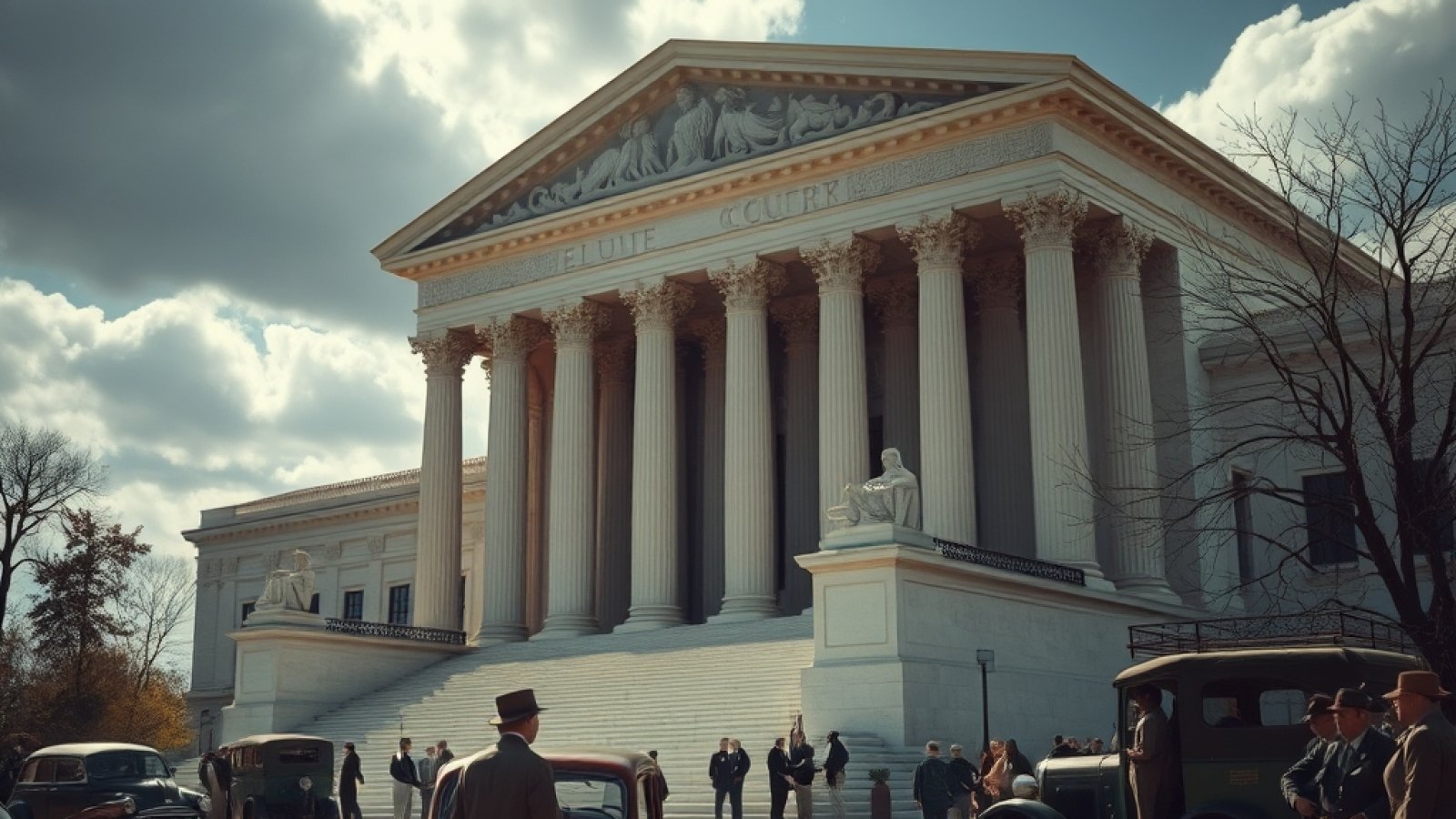
In 1956, the Supreme Court of the United States (SCOTUS) affirmed a lower court's decision that overturned an Alabama law requiring racial segregation on public buses. This affirmation legally ended the Montgomery Bus Boycott, a protest led by residents of Montgomery, Alabama, that had lasted over a year. The decision reaffirmed SCOTUS's role as the highest authority in interpreting the constitution and overturning laws that violate constitutional rights.
Legal Background
The Supreme Court is the highest judicial body in the United States, with the authority to hear all federal and state cases involving constitutional issues. Since 1803, SCOTUS has had the power of judicial review to invalidate laws deemed unconstitutional. This authority formed the basis for the 1956 decision rejecting the enforcement of Alabama's bus segregation law.
The contested Alabama law mandated that bus passengers sit separately based on race, enforcing a long-standing segregation policy in the South. The Montgomery Bus Boycott began in late 1955 in response to the arrest of Rosa Parks, a civil rights activist, and continued until the court's decision changed the law's status.
A lower court in Alabama had previously ruled that the bus segregation law violated the United States Constitution, particularly the Fourteenth Amendment, which guarantees equal protection under the law. This decision was then appealed to the Supreme Court for final review.
Trial Process
In 1956, the Supreme Court accepted the case and reviewed the lower court's decision. The Court found that Alabama's bus segregation law had no constitutional basis and therefore could not be upheld. This affirmation reaffirmed SCOTUS's ability to invalidate state regulations that conflict with the constitution.
The Supreme Court's decision not only strengthened the lower court's ruling but also affirmed the principle that racial segregation policies in public transportation could not be legally upheld. Thus, the decision provided a strong legal foundation for the civil rights movement across the United States.
Following the decision, the Montgomery Bus Boycott officially ended. Bus passengers in Montgomery were no longer required to sit separately based on race, and the long-standing segregation policy in the area was declared invalid.
Social Impact
The end of the Montgomery Bus Boycott marked a significant turning point in the civil rights movement, demonstrating that collective action could influence legal change. The Supreme Court's decision provided legal legitimacy for similar protest actions in other cities opposing segregation.
The decision also strengthened the Supreme Court's position as the guardian of the constitution, particularly in upholding civil rights. By rejecting segregation laws, the Court affirmed that discriminatory policies could not stand under constitutional scrutiny.
Historically, the 1956 decision became one of the key milestones that paved the way for subsequent decisions, including the landmark 1954 decision against school segregation. The combination of court decisions and mass action accelerated the desegregation process in the United States.
Legal Legacy
The 1956 Supreme Court ruling reaffirmed the principle that state laws must align with the Fourteenth Amendment. This decision set a precedent for future cases challenging discriminatory policies in areas such as housing and education.
The Supreme Court continues to use the power of judicial review to assess public policies, making the 1956 decision a concrete example of how the judicial branch can influence social change. This authority remains relevant in contemporary legal debates about civil rights.
To this day, the decision is studied as an example of legal success in ending segregation practices, as well as evidence that collective societal action can trigger policy change through the judicial process.
This article was automatically compiled by the HISTORYX Editorial Team from Wikipedia data licensed under CC BY-SA 4.0 on 13 Nov 2026. Corrections can be sent through the Contact page.


Discussion
Comments
Comments are reviewed by an editor before they appear. Include sources when correcting facts.
No comments yet. Be the first to respond to this article.