The Sicilian Problem
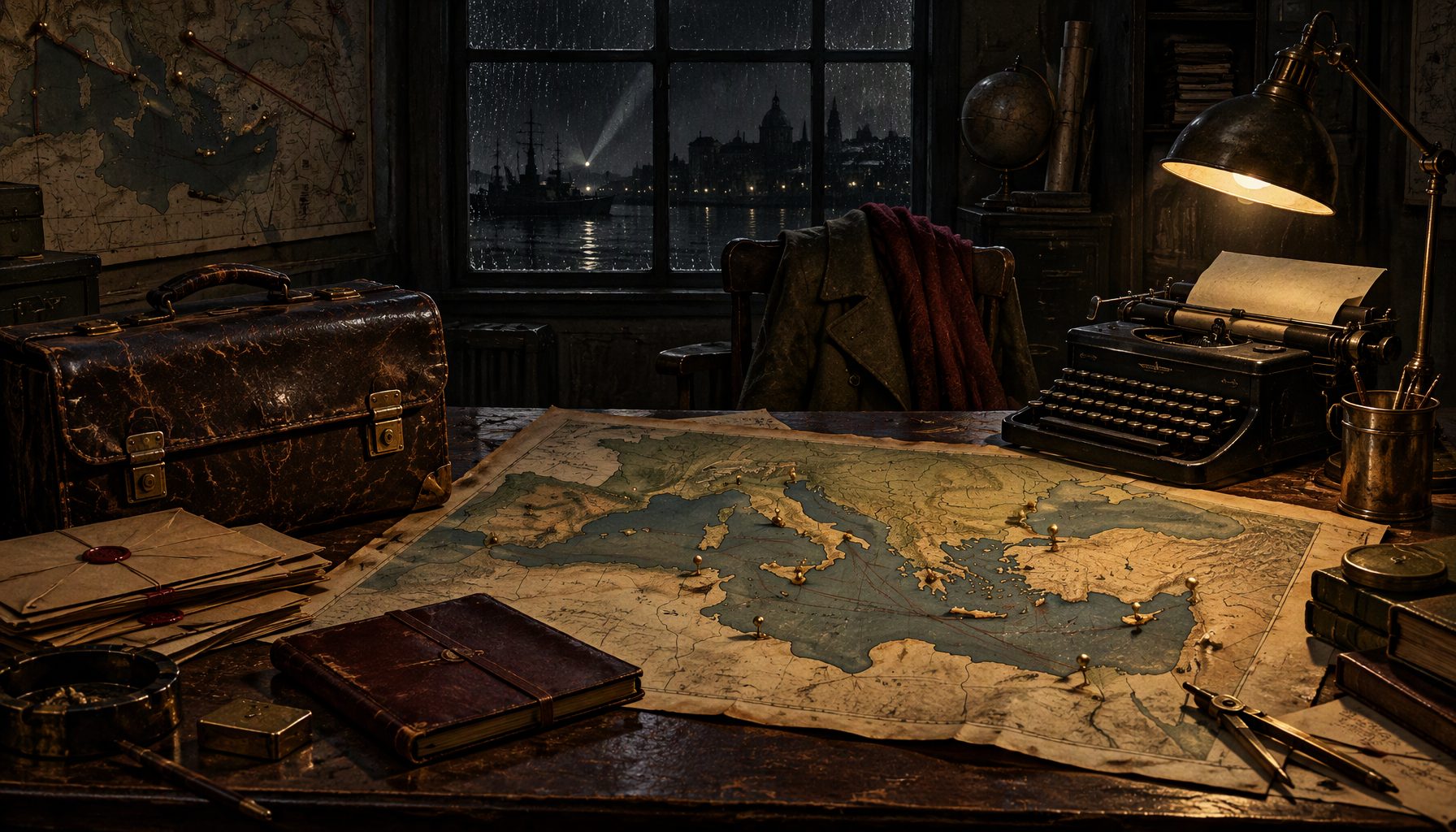
In early 1943, the Allies planned an invasion of Sicily under the codename Husky. The island was a logical gateway to southern Europe, but precisely because of this logic, Germany was sure to fortify it. The Allies needed something to make the Nazi leadership believe that the main attack would come elsewhere: Greece and Sardinia.
The answer came from a deception unit led by Ewen Montagu and Charles Cholmondeley. Their idea was simple and macabre: to drop the body of a British officer in uniform on a Spanish beach, carrying false secret documents that mentioned Sicily only as a decoy.
The Corpse That Became an Officer
The body used was that of Glyndwr Michael, a Welsh man who died in London in early 1943. His corpse was given the fictional identity of "Major William Martin," an officer of the Royal Marines. With him was placed a briefcase containing a letter from Lieutenant General Archibald Nye to General Harold Alexander, along with an identity card, tickets, and personal letters that made the identity seem real.
At the end of April 1943, the submarine HMS Seraph released the body off the coast of Huelva, Spain. Spanish authorities found the body and, as expected, handed the contents of the briefcase over to German intelligence. The Abwehr, under Wilhelm Canaris, examined the documents and passed them on to the military leadership.
Effect on Hitler's Decisions
The false documents stated that the Allies would attack Greece and Sardinia, while Sicily was only a diversionary target. Hitler received the report and ordered the strengthening of defenses in Sardinia, Greece, and Corsica. German troops and attention were divided just before the invasion of Sicily began on July 10, 1943.
The Husky invasion still faced fierce resistance, but its strategic surprise was aided by this deception. Some historians debate how much influence Mincemeat had compared to other factors, such as Allied air superiority and the weakness of Italian defenses. However, subsequently seized German documents show that reports of an "attack on Greece" did indeed influence troop placement.
A Secret Revealed Decades Later
During the war, only a handful of people knew the true identity of the body. Montagu wrote the story in 1953 under a pseudonym for some details. It was only after intelligence files were opened to the public several decades later that the name Glyndwr Michael was revealed and his full story could be traced.
Mincemeat is now studied as an example of a deception operation that combines small details, convincing bureaucracy, and an understanding of how the enemy reads information. Its success did not depend on advanced technology, but on a plausible and consistent story.
Legacy of the Operation
This operation also shows the dark side of intelligence warfare: a human being without family, presented to the public, was used as a tool of the state, and his identity was kept secret for years. The story of Mincemeat is therefore read as a mixture of cleverness, luck, and the moral cost that is rarely discussed in stories of victory.
For military history, the lesson endures: information believed by the enemy can be more powerful than weapons, as long as it comes through seemingly plausible channels and is supported by many small details that reinforce each other.

Discussion
Comments
Comments are reviewed by an editor before they appear. Include sources when correcting facts.
No comments yet. Be the first to respond to this article.