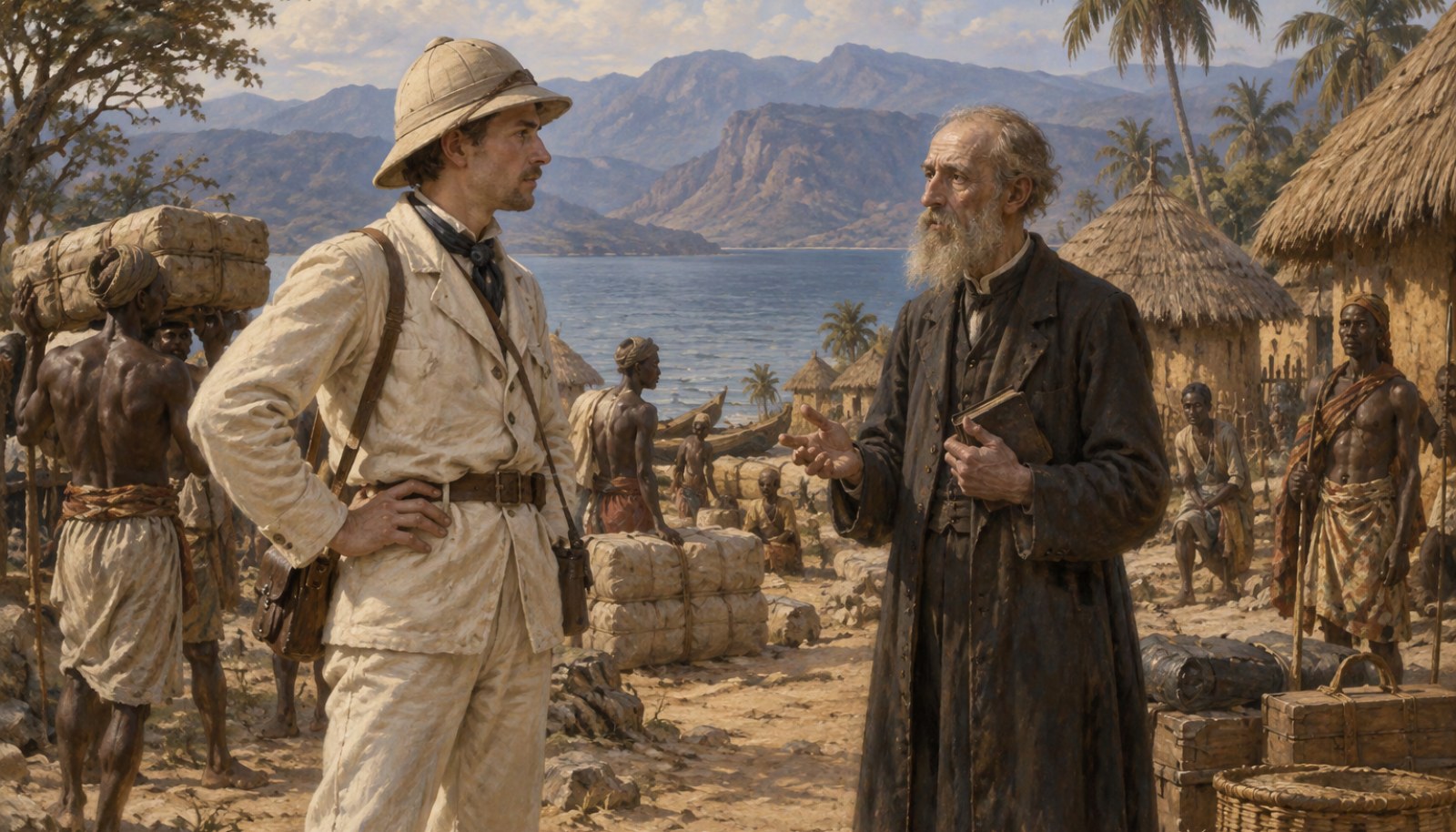
On November 10, 1871, in Ujiji, a trading post on the eastern shore of Lake Tanganyika, American journalist Henry Morton Stanley finally met David Livingstone, the Scottish explorer who had been out of contact for nearly six years. Stanley doffed his hat and uttered the now-famous words: "Dr. Livingstone, I presume?" The meeting ended one of the most talked-about searches of the 19th century.
The Missing Explorer
Livingstone departed from Zanzibar in 1866 to solve the mystery of the source of the Nile River. He traversed the regions of Lake Nyasa, Lake Tanganyika, and the Manyema forest, but his medical supplies and trade goods ran out, and some of his assistants left the expedition. News of him only reached Europe through letters carried by Arab traders, often months late.
In 1869 and 1870, Livingstone's letters that reached Zanzibar told of illness, loss of equipment, and massacres in Nyangwe. Newspapers began to write that he might be dead. The Royal Geographical Society in London and several private parties urged a rescue expedition to be sent, although no one knew exactly where he was.
The Stanley Expedition
James Gordon Bennett Jr., owner of the New York Herald, chose Stanley to find Livingstone. Stanley departed from Zanzibar in March 1871 with a caravan of nearly 200 people, consisting of guards, porters, cooks, and interpreters. He carried letters, medicine, food, cloth, and supplies for Livingstone if he found him.
The journey through Bagamoyo, Tabora, and the Unyamwezi plains took more than seven months. The caravan was plagued by fever, dysentery, and conflicts with the locals; many porters fled or died. When Stanley arrived in Ujiji on November 10, 1871, most of his supplies were gone, but he still carried enough provisions to help Livingstone.
The Meeting at Ujiji
Stanley found Livingstone in a weak condition, lacking medicine and almost out of trade goods. The meeting was simple: Stanley handed over letters from Europe, and then the two talked about the expedition and the map of Africa. For Livingstone, Stanley's arrival meant new supplies and the opportunity to continue his search.
The phrase "Dr. Livingstone, I presume?" first appeared in Stanley's book, How I Found Livingstone, published in 1872. Livingstone's diary notes do not contain the phrase, so some historians suspect Stanley composed it later to make the meeting scene sound more dramatic. Regardless, it is Stanley's version that the world remembers.
They spent about a month together. Stanley interviewed Livingstone, copied his maps, and heard firsthand accounts of the journey in Manyema. Before parting, Stanley promised to send additional supplies from the coast and to carry Livingstone's letters to be forwarded to his family.
Exploration of Lake Tanganyika
In November and December 1871, Stanley and Livingstone sailed along the northern shore of Lake Tanganyika with a canoe. They wanted to confirm whether the lake was connected to the Nile River, as Livingstone had suspected. The result was that they did not find a large river flowing out of the northern end towards the Nile, so the theory that Tanganyika was the source of the Nile weakened.
The journey also gave Stanley firsthand experience of the conditions of expeditions in central Africa. Supplies, boats, and relations with local traders became lessons he carried into his next expedition. For Livingstone, the journey with Stanley confirmed that the search for the source of the Nile should be continued westward, towards the Lualaba region.
Return and Legacy
Stanley departed for the coast at the end of 1871 and arrived in Zanzibar in May 1872. His dispatch about the meeting became big news in Europe and America, and his book made him famous. Livingstone refused to return; he chose to continue his journey despite his deteriorating health.
Livingstone died on May 1, 1873, in Ilala, near Lake Bangweulu, from malaria and dysentery. His body was carried by Susi and Chuma, two of his loyal assistants, over more than 1,500 kilometers to the coast, then sent to England and buried in Westminster Abbey on April 18, 1874.
The meeting at Ujiji became one of the most famous scenes in 19th-century exploration history. Behind the romance of the opening phrase, the story also shows the cost of colonial expeditions: hundreds of porters, guards, and local residents bore the greatest risks, while the names recorded in books and monuments are those of two Europeans.
Discussion
Comments
Comments are reviewed by an editor before they appear. Include sources when correcting facts.
No comments yet. Be the first to respond to this article.