Divided Europe
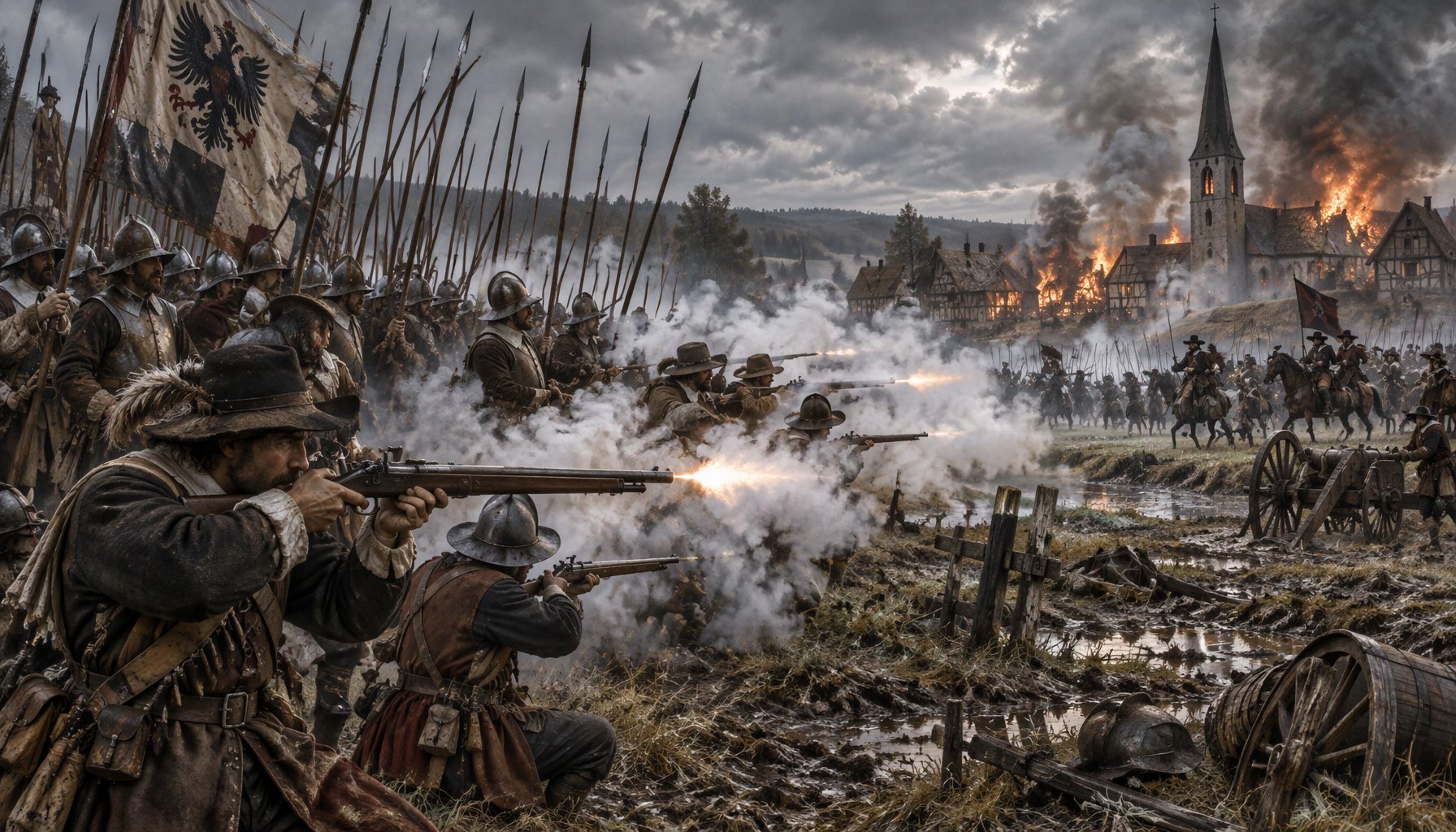
At the beginning of the 17th century, Europe was divided by the rivalry between Catholic and Protestant powers. The Peace of Augsburg in 1555 attempted to regulate relations among the territories of the Holy Roman Empire, but it did not resolve the tensions. The Catholic Habsburg dynasty ruled over many territories, while Protestant nobles in Bohemia and Germany felt threatened.
The Holy Roman Empire was not a modern state with a strong central government. Its territories consisted of hundreds of kingdoms, duchies, free cities, and ecclesiastical states, each with their own interests. Religious tensions mixed with political ambitions, family legacies, and interstate rivalries, creating a volatile situation.
The Bohemian Revolt of 1618
On May 23, 1618, a group of Protestant Bohemian nobles threw two Habsburg officials and a secretary from a castle window in Prague. This event, known as the Defenestration of Prague, sparked the war. The rebels formed their own government and sought support from Protestant nations.
The revolt was quickly suppressed. In 1620, Catholic forces defeated the Bohemian army at the Battle of White Mountain near Prague. The rebel leaders were punished, their lands confiscated, and Bohemia returned to Habsburg rule. However, the victory did not end the conflict, as the war spread to German territories.
The War Becomes a Major Conflict
In 1625, King Christian IV of Denmark entered the war to aid the Protestants. He was concerned that Habsburg power would threaten his territories. Danish forces suffered defeat, and in 1629 Emperor Ferdinand II issued the Edict of Restitution, which returned church lands seized since 1552 to the Catholic Church.
This policy angered the Protestants and expanded the war. Albrecht von Wallenstein, an ambitious Habsburg commander, built a large army and achieved victories in various battles. However, his growing power made the nobility and the emperor suspicious, and he was later assassinated in 1634.
Wallenstein and the Swedish War
In 1630, King Gustavus Adolphus of Sweden landed in Germany with a disciplined army and new tactics. He used more flexible formations, light artillery, and infantry-cavalry cooperation. The Swedish victory at Breitenfeld in 1631 changed the course of the war and saved the Protestants from total defeat.
Gustavus died at the Battle of Lützen in 1632, but the war continued. Swedish forces kept fighting, while Catholic France began supporting the Protestants to curb Habsburg power. In 1635, France openly entered the war, turning the conflict into more than just a religious war, but a struggle for power among nations.
The Devastation of Germany
The German territories became the main battlefield for nearly three decades. Mercenary armies from various nations moved from one territory to another, plundering villages and seizing food supplies. Famine, disease, and violence caused mass civilian deaths.
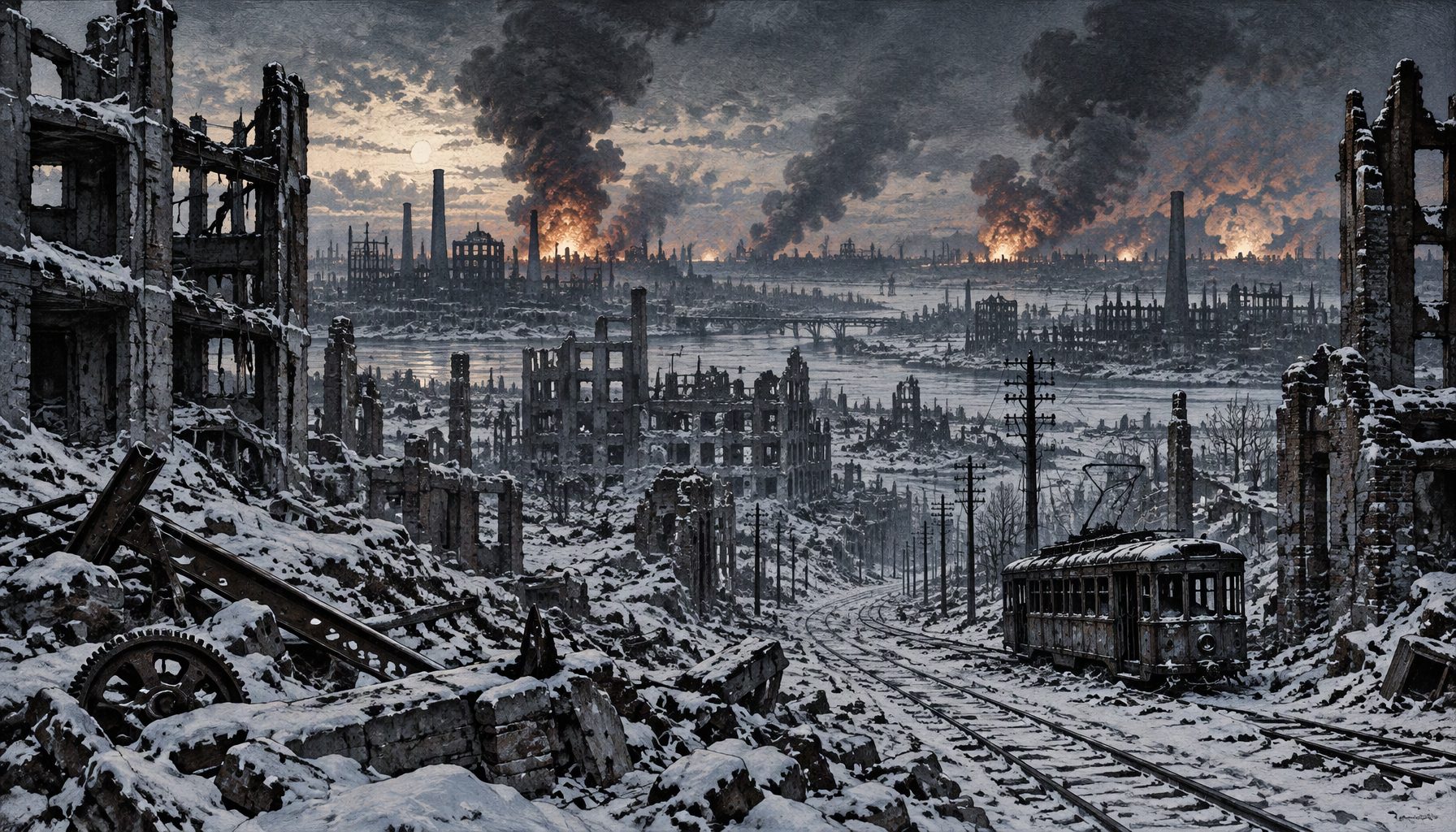
Casualty estimates vary, but many German regions lost 20 to 40 percent of their population. Some cities were destroyed, farmland abandoned, and local economies collapsed. For many people, this war was not just an interstate conflict, but a humanitarian disaster that destroyed daily life.
The Peace of Westphalia 1648
Peace negotiations took place in Münster and Osnabrück, Westphalia, for several years. The Peace of Westphalia was signed in 1648 and involved many parties, including the Emperor, France, Sweden, and the German states. The treaty regulated territorial changes, religious rights, and interstate relations.
The principle of "cuius regio, eius religio" was reinforced, although with exceptions and guarantees for minorities. The Netherlands and Switzerland were recognized as independent from the Empire. The treaty also affirmed the sovereignty of the German states, weakening the emperor's power and strengthening the system of sovereign states in Europe.
Casualties and Social Changes
The Thirty Years' War caused the deaths of millions, either from combat, starvation, or disease. Many communities lost leaders, farmers, and skilled workers. Waves of refugees moved across Europe, and faith in religious and political authorities was shaken.
The war also accelerated changes in warfare. Permanent armies, military logistics, and taxes to fund wars became more important. Nations began building stronger bureaucracies to raise funds and manage armies, although the process was slow and uneven.
Legacy
The Peace of Westphalia is often cited as the beginning of the modern state system. The principles of state sovereignty, non-intervention, and equality among nations became the basis of international relations, although they were often violated in practice. The treaty also set a precedent for resolving major conflicts through multilateral negotiations.
For Germany, the war left a lasting trauma. Memories of destruction, famine, and division became part of the cultural identity. For Europe, the war demonstrated the dangers of religious fanaticism mixed with political ambition, as well as the price paid when national interests override peace.
Discussion
Comments
Comments are reviewed by an editor before they appear. Include sources when correcting facts.
No comments yet. Be the first to respond to this article.