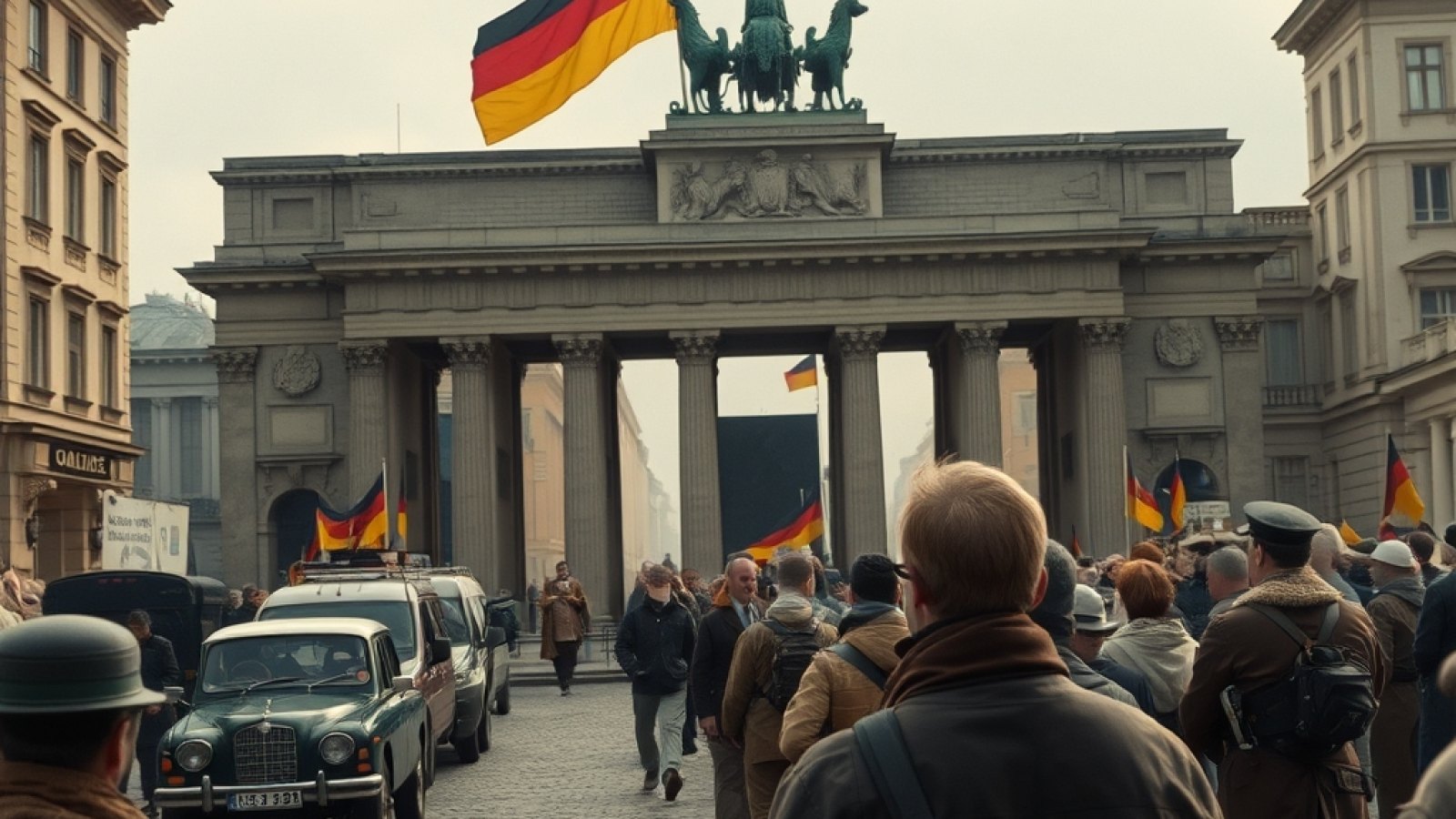
After Germany reunified, on October 3, 1990, the Federal Republic of Germany and Poland signed an agreement recognizing the Oder–Neisse line as the official border between the two countries. This agreement marked the end of tensions that had persisted since the end of World War II and affirmed Germany's integrated political status.
Background
The Oder–Neisse line, which follows the Oder River and the Lusatian Neisse, has been an unofficial border between Germany and Poland since the Potsdam Agreement. In 1950, the Communist governments of East Germany and Poland agreed to this line, while West Germany refused until 1972. After the 1989 Revolution, the two countries renegotiated the status of the border.
The long history of this region includes areas that were once part of the German Kingdom before 1945. After the war, the area was divided between Poland and the Soviet Union, with most of the western area becoming part of Poland. German residents in the area, about 12 million in 1944, fled as the Red Army advanced.
This line also became a point of conflict between East Germany and Poland during the Cold War era. In 1990, West Germany finally accepted this line as the final border, marking a significant political change in Europe.
Course of Events
The Oder–Neisse Border Treaty was signed on October 3, 1990, the day of German reunification. The document recognized that the line was the official border between Germany and Poland. The signing took place in Berlin, a city that had also just experienced reunification.
Other European countries witnessed this agreement as an important step in regional stability. Germany, after merging its eastern and western territories, adopted full sovereignty over its entire territory, including areas previously separated.
This agreement also marked the official recognition of the end of World War II agreements, ending claims to previously disputed territories. It affirmed that the two countries had resolved long-standing historical issues that had caused tension.
Political Impact
By recognizing the Oder–Neisse line, Germany relinquished claims to Polish territories that were previously part of Germany. This strengthened bilateral relations and facilitated economic integration in the region.
This agreement also provided a basis for Poland to legally expand its territory, as well as facilitate cooperation in security and defense, including NATO and EU membership.
The official recognition of this border marked the end of legal uncertainty over the area, providing certainty for civilians and businesses operating along the border.
Social and Economic Impact
The social impact was seen in the stability created for the population on both sides of the border. Cross-country trade increased, utilizing transportation facilities built during the Communist era.
The economy of the border region experienced growth, with foreign investment increasing in areas previously isolated. Infrastructure such as bridges and highways were repaired, strengthening regional connectivity.
This agreement also facilitated the process of historical reconciliation, enabling cultural and educational exchanges between Germany and Poland, and reducing long-standing political tensions.
This article was automatically compiled by the HISTORYX Editorial Team from Wikipedia data licensed CC BY-SA 4.0 on November 14, 2026. Corrections can be sent via the Contact page.


Discussion
Comments
Comments are reviewed by an editor before they appear. Include sources when correcting facts.
No comments yet. Be the first to respond to this article.