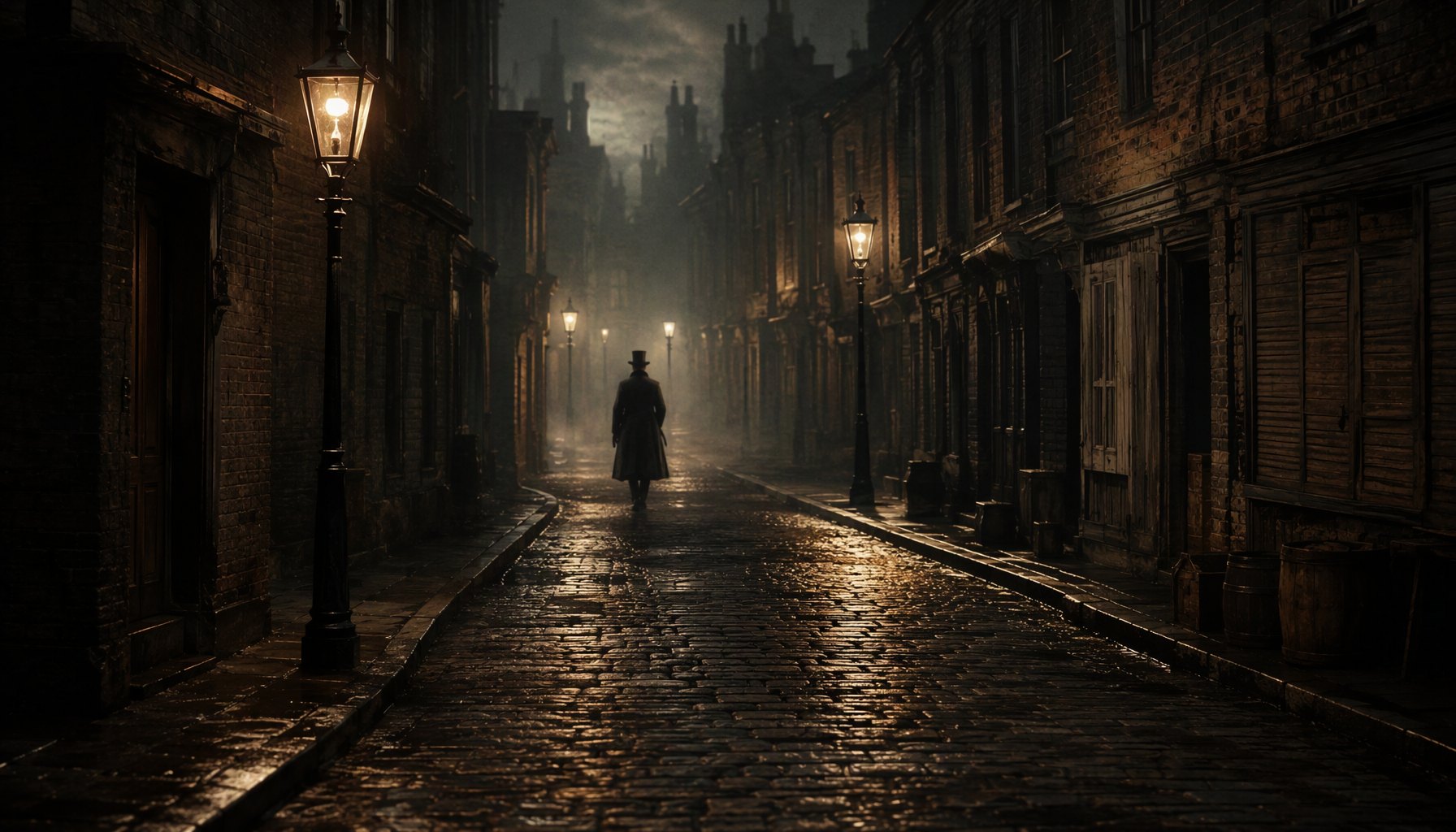
London 1888
Whitechapel in 1888 was a slum area in East End London. The area was filled with tenement houses, factories, and narrow streets, inhabited by poor workers and immigrants, mostly Jews from Eastern Europe. Poverty, alcoholism, and prostitution were part of daily life.
At that time, London was the largest city in the world, the center of the empire and trade. However, wealth and poverty coexisted. The press and the middle-class society began to be interested in the life of East End, while the police faced great limitations in maintaining security in the densely populated area.
Victims
The cases later linked to Jack the Ripper include five murders considered "canonical". Mary Ann Nichols was found on August 31, 1888, followed by Annie Chapman on September 8. On September 30, Elizabeth Stride and Catherine Eddowes were killed on the same night, an event known as the "Double Event".
The last victim considered canonical was Mary Jane Kelly, found on November 9, 1888, in her room at Miller's Court. Several other murders in Whitechapel during that period were also suspected to be related, but not all experts agree. The victims lived in poverty and some worked as prostitutes to survive.
Murder Pattern
The murders had similar characteristics: the victims died from neck wounds, and some corpses showed mutilation in the abdominal area. In some cases, body organs were removed. The murders happened quickly and relatively quietly, in dark and deserted places.
Doctors who examined the corpses had differing opinions about the perpetrator's skill. Some concluded that the perpetrator had anatomical knowledge, while others judged the mutilation to be done roughly and quickly. There were no eyewitnesses who could identify the perpetrator, although some people reported seeing a suspicious figure around the locations.
Letters and the Name "Jack the Ripper"
During the investigation, the police and newspapers received many letters claiming to be from the killer. The most famous was "Dear Boss" received at the end of September 1888 and introduced the name "Jack the Ripper". There was also the postcard "Saucy Jacky" and the letter "From Hell" accompanied by a piece of organ.
The authenticity of the letters is debated. Some experts suspect that the "Dear Boss" letter was written by a journalist to increase sales, while other letters might have been created by someone seeking attention. However, the name "Jack the Ripper" from the letter stuck and became one of the most famous criminal brands in history.
Police Investigation
Scotland Yard and local police conducted a large-scale investigation. They interrogated hundreds of people, inspected boarding houses, and deployed additional patrols. Metropolitan Police Commissioner, Charles Warren, resigned in November 1888 after criticism of the case handling and conflicts with local authorities.
The police also used relatively new methods, such as photography, fingerprints, and simple psychological analysis. However, technological limitations, lack of coordination, and abundant false information made the investigation unsuccessful in producing prosecutions. The Whitechapel case files remain open without a definite suspect.
Suspects and Theories
More than a hundred people have been proposed as suspects, ranging from barbers, doctors, traders, to royal family members. Names like Montague Druitt, Aaron Kosminski, Michael Ostrog, and Thomas Cutbush appear in police records. Some theories later pointed to the artist Walter Sickert or even completely unrelated figures.
Many modern identification claims, including those based on DNA analysis of letters or shawls, are not widely accepted by historians. The main problem is the unclear chain of evidence, contamination, and the absence of valid comparative samples. To this day, there is no consensus on the identity of Jack the Ripper.
Popular Culture
The Jack the Ripper case became the first large-scale media sensation. Newspapers competed to present sensational news, images, and speculations. Society followed the case development like a serial story. The term "Ripperology" later emerged to refer to amateur and professional studies of the case.
The legend of Jack the Ripper has inspired films, novels, comics, games, and tours in London. However, its popularity often obscures the fact that the victims were poor women living in difficult conditions. The history of the case also serves as an example of how the media can shape public perception of crime.
What Can Be Learned
The Jack the Ripper case provides an insight into the social life of Victorian London, housing conditions, poverty, and police limitations in the 19th century. The case also highlights the importance of forensic evidence, inter-agency coordination, and information management in criminal investigations.
To this day, the identity of the perpetrator remains a mystery. However, historians continue to emphasize the importance of honoring the victims as human beings, not just part of a legend. Jack the Ripper is an unsolved case, but also a mirror of how society remembers crime and those affected.
Discussion
Comments
Comments are reviewed by an editor before they appear. Include sources when correcting facts.
No comments yet. Be the first to respond to this article.