Prohibition Creating Black Markets
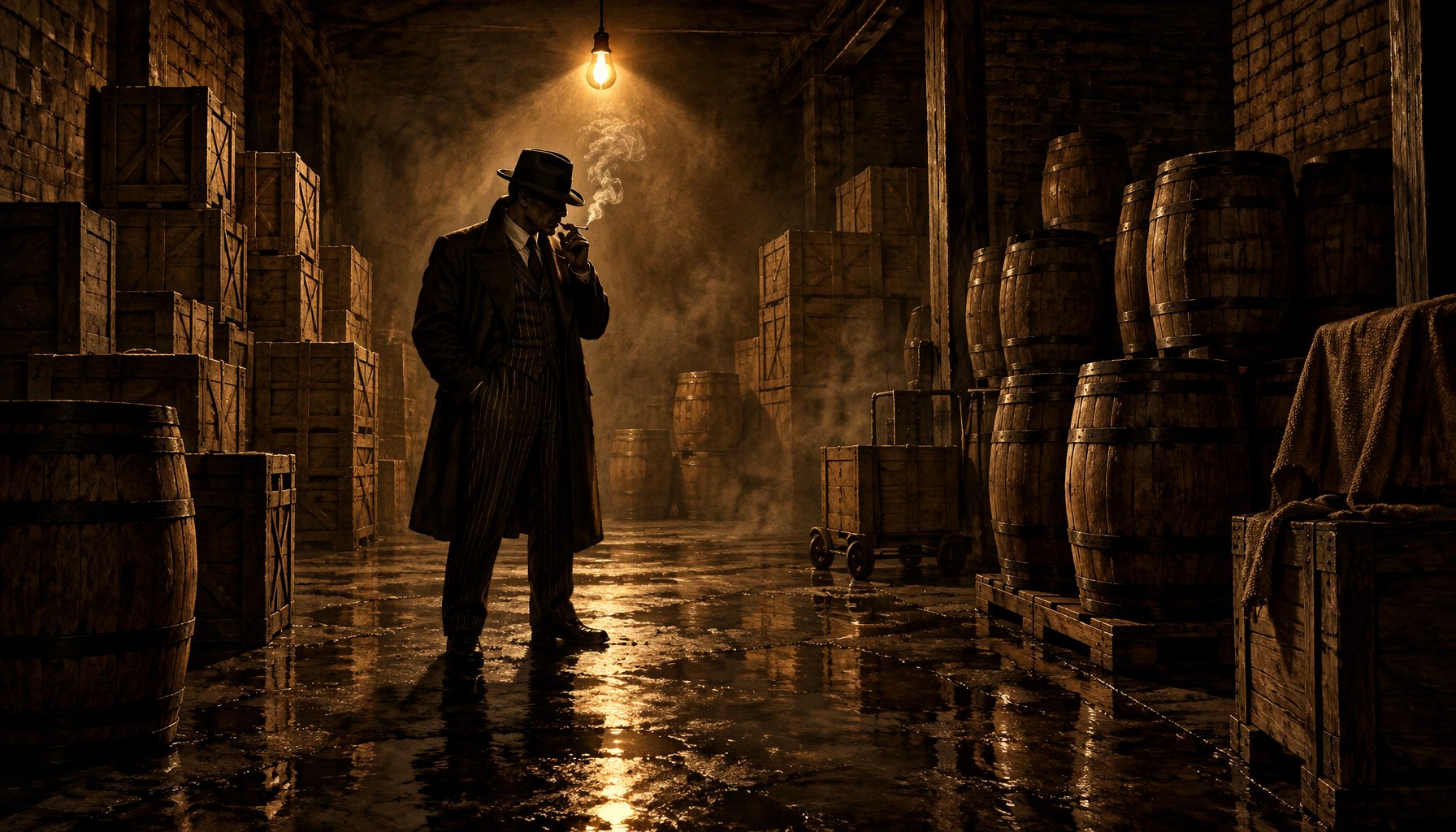
In 1920, the 18th Amendment to the United States Constitution prohibited the production, sale, and transportation of alcoholic beverages. The prohibition was supported by moral movements and religious organizations that considered alcohol a source of poverty and violence. However, the prohibition did not eliminate demand; it only shifted trade to the black market.
The black market for liquor grew rapidly. Smugglers brought in alcohol from Canada, Mexico, and ships offshore. Secret drinking establishments known as speakeasies emerged in major cities. Police and local officials were often unable or unwilling to enforce the prohibition, and some accepted bribes.
From Brooklyn to Chicago
Alphonse Gabriel Capone was born in Brooklyn, New York, in 1899 to an Italian immigrant family. He left school at a young age and became involved with street gangs. In 1919 or 1920, he moved to Chicago to work for Johnny Torrio, a crime boss who built a network of illegal businesses in the city.
Chicago in the 1920s was a rapidly growing city, full of immigrants, and had corrupt politics. Torrio and Capone saw great opportunities in the illegal alcohol trade. They built a network of suppliers, sales locations, and political protection. When Torrio retired in 1925, Capone took control.
The Kingdom of Illegal Business
At its peak, Capone's network controlled much of the illegal alcohol trade in and around Chicago. His income also came from gambling, prostitution, and extortion. Capone built an image as a generous boss, distributing food to the poor and supporting community events, while managing a violent business.
Violence was part of the business model. Competitors were attacked, witnesses threatened, and officials bribed. Capone himself tried to appear as a businessman, not a street criminal. He wore expensive suits, spoke to journalists, and enjoyed public attention that gave him a celebrity aura.
The St. Valentine's Day Massacre
On February 14, 1929, seven members of a rival gang were lined up against a wall in a Chicago garage and shot dead. The event is known as the St. Valentine's Day Massacre. Capone was in Florida at the time, so he could not be directly linked to the incident, but the public and police suspected his involvement.
The massacre shocked the public and increased pressure to combat organized crime. However, there was no direct evidence sufficient to prosecute Capone for the murders. He remained a symbol of the violence of the Prohibition era, although legally he was never convicted for the massacre.
Eliot Ness and Law Enforcement
By the late 1920s, the federal government increased law enforcement efforts. Eliot Ness, an agent of the Prohibition Bureau, led a team known as the "Untouchables" because they were considered unbribable. The team conducted raids and disrupted Capone's illegal beer operations.
However, Ness's success was not as great as depicted in films and television. Capone continued to operate, and prosecutions for prohibition violations were difficult due to evidence and witnesses often disappearing. Capone's downfall came from a seemingly less dramatic area: taxes.
Falling Due to Taxes
In 1931, Capone was tried on charges of income tax evasion. The government successfully proved that he earned large sums from illegal businesses but did not report them. In October 1931, he was found guilty on several charges and sentenced to 11 years in prison.
Capone was initially imprisoned in Atlanta, then transferred to Alcatraz in 1934. In prison, his health deteriorated due to untreated syphilis. He was released in 1939 and died in Florida in 1947. He was never convicted of murder or directly of illegal alcohol trading.
Legend and Reality
Capone became an icon of popular culture. Films, books, and songs depicted the Prohibition era as a glamorous and dangerous time. However, behind the legend, the era was filled with violence, corruption, and suffering. Prohibition failed to achieve its goals and instead enriched criminal networks.
In 1933, the 21st Amendment repealed alcohol prohibition. The legal market reopened, and the power of gangs like Capone's gradually declined. Capone's story remains a lesson on how unrealistic policies can create unintended consequences.

Discussion
Comments
Comments are reviewed by an editor before they appear. Include sources when correcting facts.
No comments yet. Be the first to respond to this article.