Shadows of the Cold War
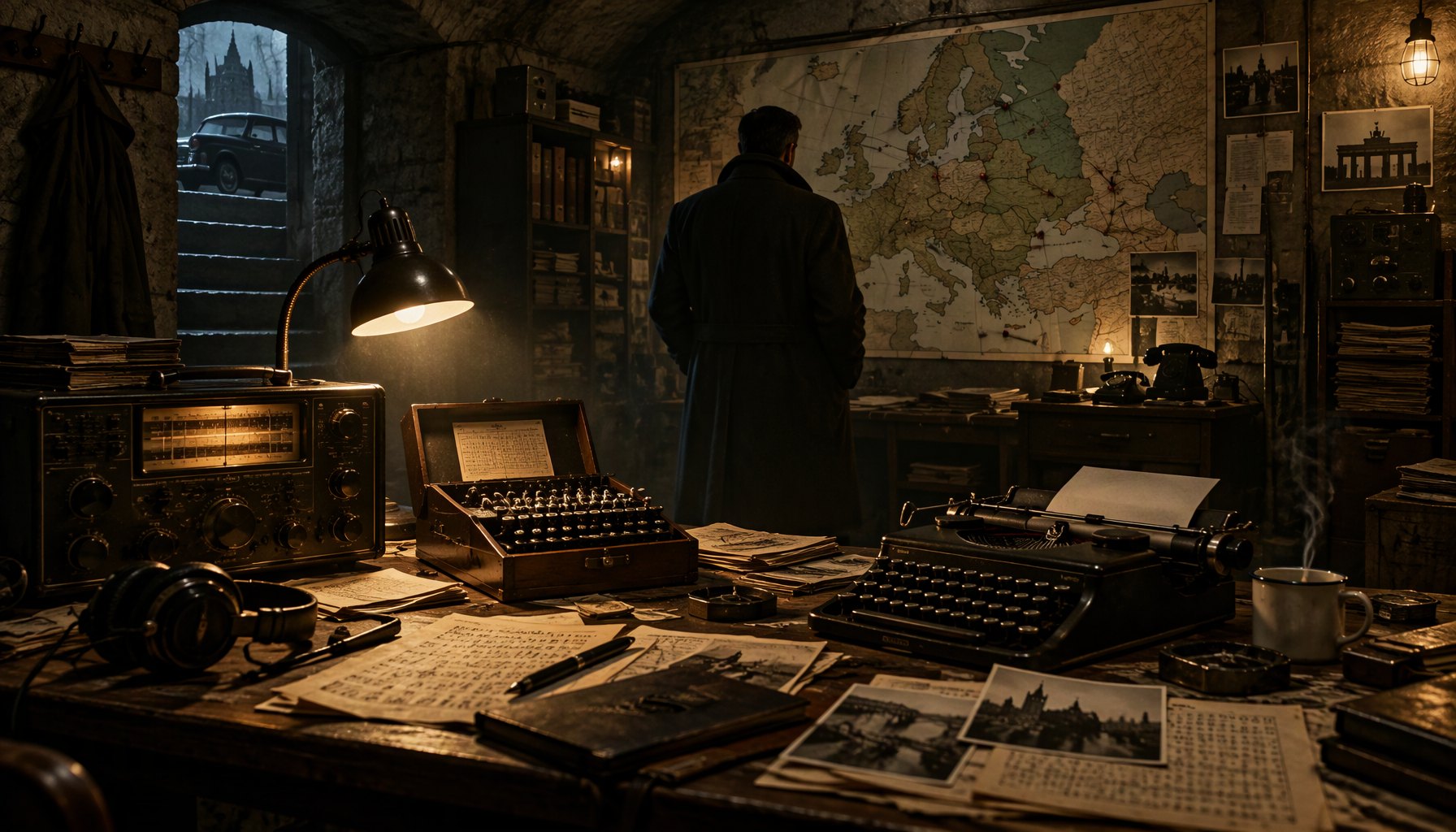
After World War II, Europe was divided between the Western bloc and the Soviet bloc. The main concern of the Western European countries was the possibility of a swift invasion by the Soviet Union. If an invasion occurred, the official governments and militaries might be unable to operate. From this concern, the idea of "stay-behind" was born: secret networks that would remain in occupied territories to carry out resistance, sabotage, and intelligence gathering.
Such networks were established in several Western European countries with the support of American intelligence agencies and NATO coordination. In Italy, the network was known as Gladio, which later became the common name for similar operations in other countries. Its existence was kept secret for decades.
Forming the Network
The stay-behind program began in the late 1940s. Selected military officers and civilians were trained in radio communication, weapon use, sabotage, and evacuation. Equipment and weapons were stored in secret locations. This network was not intended to engage in open combat but to endure and disrupt the occupying forces.
Coordination was carried out through NATO channels and national intelligence agencies. However, the level of awareness of civilian governments varied. In some countries, only a few officials knew of the network's existence. This secrecy was considered necessary to protect the operation but also created a space that was difficult to oversee democratically.
Gladio in Italy
Italy became one of the most famous examples. The Gladio network in Italy involved military officers and anti-communist groups. The political context of Italy during the Cold War was highly polarized: the Italian Communist Party was large and influential, while the United States and its allies feared that Italy might fall under Soviet influence. In this climate, the stay-behind network was seen as a preventive tool.
However, Gladio was not the only secret operation. There were also propaganda programs, political funding, and other operations aimed at curbing communist influence. The line between prevention, intelligence gathering, and political operations was not always clear. This later became a source of criticism after the existence of Gladio was revealed.
1990 Acknowledgement
In August 1990, Italian Prime Minister Giulio Andreotti acknowledged the existence of Gladio in a report to parliament. The acknowledgment surprised the public. For years, the existence of the secret network had been denied or not openly discussed. Andreotti's acknowledgment sparked investigations and debates about the extent of the operation.
Subsequent documents showed that similar networks existed in other countries, although they had different names and forms. Governments in various countries faced questions about parliamentary oversight, budgets, and the purpose of the networks. Some argued that the networks were purely defensive; others demanded full transparency.
Allegations and Debates
After the acknowledgment, allegations emerged that the Gladio network or individuals associated with it were involved in terrorist actions and a "strategy of tension" to prevent the Communist Party from gaining power. These allegations became one of the sharpest controversies in post-war Italian history. Several parliamentary investigations and courts tried to map the relationships between secret operations, right-wing groups, and bombings.
However, not all allegations were proven. Some researchers assessed that the available evidence was insufficient to conclude that Gladio as an organization planned terrorism. Others emphasized that individuals who had been involved in the secret network did appear in investigations. This difference in interpretation keeps Gladio a debated topic, not a closed story.
Parliamentary Investigations
The Italian Parliament formed a commission to investigate terrorism and bloody events from the 1960s to the 1980s. The commission's report highlighted the complexity of the relationships between state actors, secret groups, and political organizations. The report also criticized the lack of civilian oversight of intelligence operations.
In other countries, the existence of stay-behind networks also raised similar questions. Some countries opened archives, while others continued to restrict access. For historians, the main difficulty is the nature of the operation itself: documents may have been destroyed, witnesses may have died, and many decisions were not officially recorded.
Lessons from Secret Operations
Gladio illustrates a classic dilemma in national security. On one hand, nations feel the need to prepare contingency plans for the worst-case scenarios. On the other hand, unsupervised secret operations can pose risks of abuse, corruption, and loss of public trust. The balance between secrecy and accountability is not an easy one.
To this day, Gladio is studied in intelligence studies and Cold War history. This case is not just about Italy or NATO, but about how democratic nations manage secrets, face threats, and hold themselves accountable when the veil of secrecy is lifted.

Discussion
Comments
Comments are reviewed by an editor before they appear. Include sources when correcting facts.
No comments yet. Be the first to respond to this article.