The Divided Peninsula
At the end of World War II, Japan surrendered and Korea, previously under Japanese rule, was divided into two occupation zones along the 38th parallel. The Soviet Union controlled the north, while the United States controlled the south. The initial temporary division became a permanent border when two nations were established: the Republic of Korea in the south in August 1948 and the Democratic People's Republic of Korea in the north in September 1948.
Both governments claimed to be the sole legitimate government over the entire peninsula. Tensions escalated along the border, accompanied by minor skirmishes and propaganda wars. By 1950, the situation had become one of the most dangerous flashpoints in the Cold War.
The Invasion of June 25, 1950
In the early hours of June 25, 1950, North Korean forces crossed the 38th parallel and advanced southward. The attack successfully pushed back the limited South Korean and American forces. Seoul fell within days, and North Korean forces continued to advance, controlling almost the entire peninsula except for the area around Busan.
The United Nations Security Council issued a resolution calling for the withdrawal of North Korean forces and the formation of a UN command. The resolution passed because the Soviet Union was boycotting the Security Council. Troops from various nations, with the United States as the primary force, were sent to aid South Korea.
Incheon and the Turning Point
General Douglas MacArthur led an amphibious landing operation at Incheon on September 15, 1950. Incheon was chosen due to its difficult currents and proximity to Seoul, allowing the landing to cut off North Korean supply lines. The operation was successful and quickly changed the course of the war. UN forces recaptured Seoul and continued their advance north.
By October 1950, UN forces approached the Yalu River, the border with China. MacArthur was optimistic that the war could end before Christmas. However, China warned against foreign forces approaching its border. The warning was not fully heeded, and by late October 1950, Chinese forces began entering Korea.
Chinese Intervention
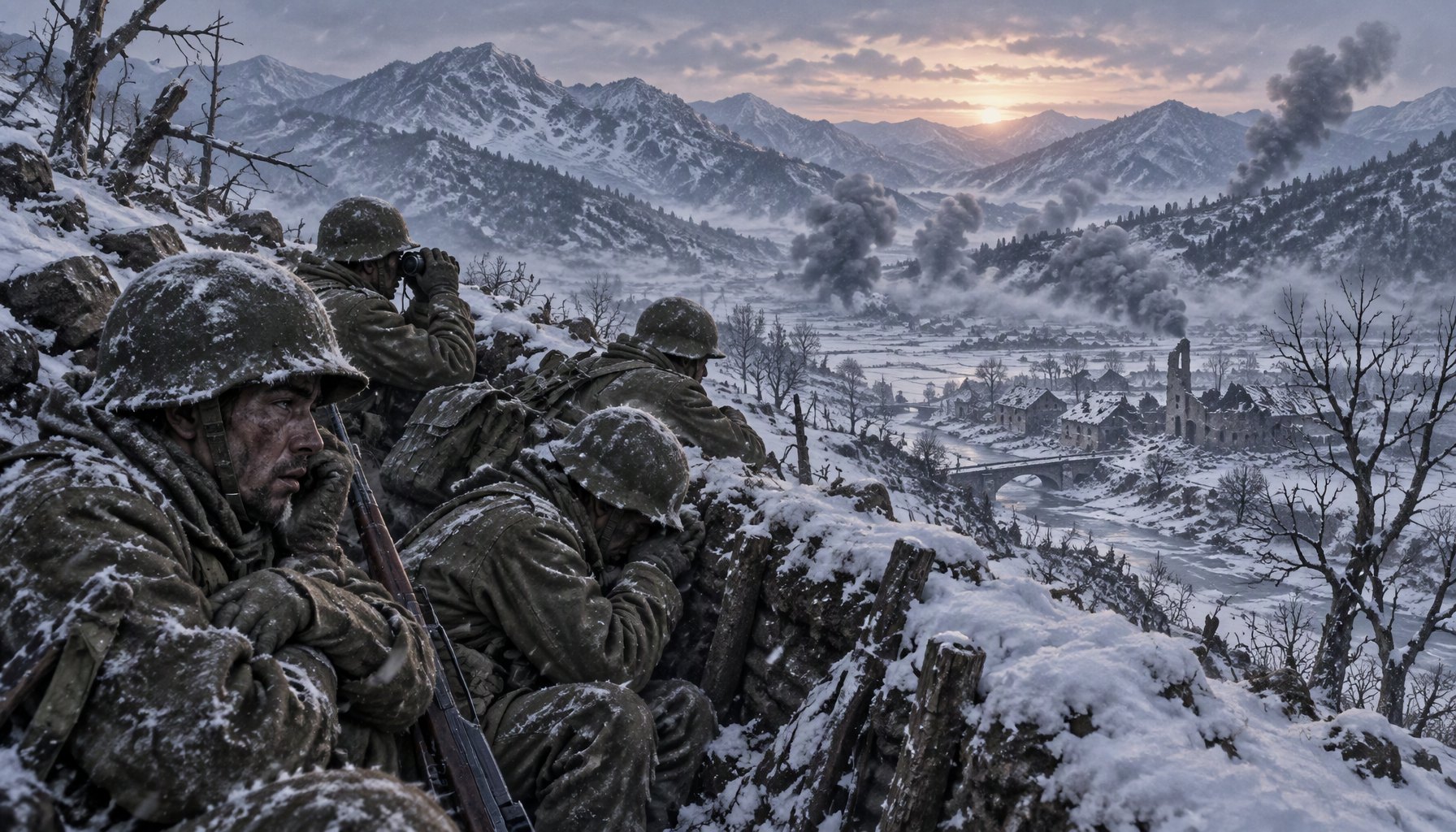
Chinese intervention changed the course of the war. Large-scale attacks forced UN forces to retreat from North Korea. Seoul was recaptured by communist forces in January 1951. The war then became a series of back-and-forth battles along the front lines near the 38th parallel, characterized by trenches, heavy artillery, and intense aerial warfare.
Aerial warfare became one of the most devastating aspects. North Korean cities were heavily bombed, while new jet aircraft such as the MiG-15 and F-86 Sabre clashed in the skies. On the ground, civilians bore the brunt of the conflict. Civilian casualties are estimated to have reached millions, and many families were separated by the front lines and the subsequent demilitarized zone.
The Road to Panmunjom
Armistice negotiations began in July 1951 in Kaesong and later continued in Panmunjom. The talks dragged on due to differences over the demarcation line, prisoner exchanges, and the status of prisoners who did not wish to return. Fighting continued while negotiations were ongoing, making the war a simultaneous "talking and shooting" conflict.
Prisoner of war issues became one of the biggest obstacles. Many North Korean and Chinese prisoners stated they did not wish to return, while the communist side demanded the repatriation of all prisoners. A compromise eventually involved a neutral commission and a voluntary repatriation process, although its implementation was complex and fraught with tension.
Armistice, Not Peace
On July 27, 1953, the Korean Armistice Agreement was signed in Panmunjom. The agreement established a demilitarized zone approximately four kilometers wide that divides the peninsula, arranged prisoner exchanges, and formed the Joint Military Commission. South Korea did not sign the agreement, although it later recognized the armistice as a framework for security.
Importantly, the armistice is not a peace treaty. Technically, the war has not ended with a formal peace agreement. Efforts to replace the armistice with a peace treaty have repeatedly failed due to differing interests, particularly over North Korea's nuclear program and the presence of American troops in the south.
Casualties and Destruction
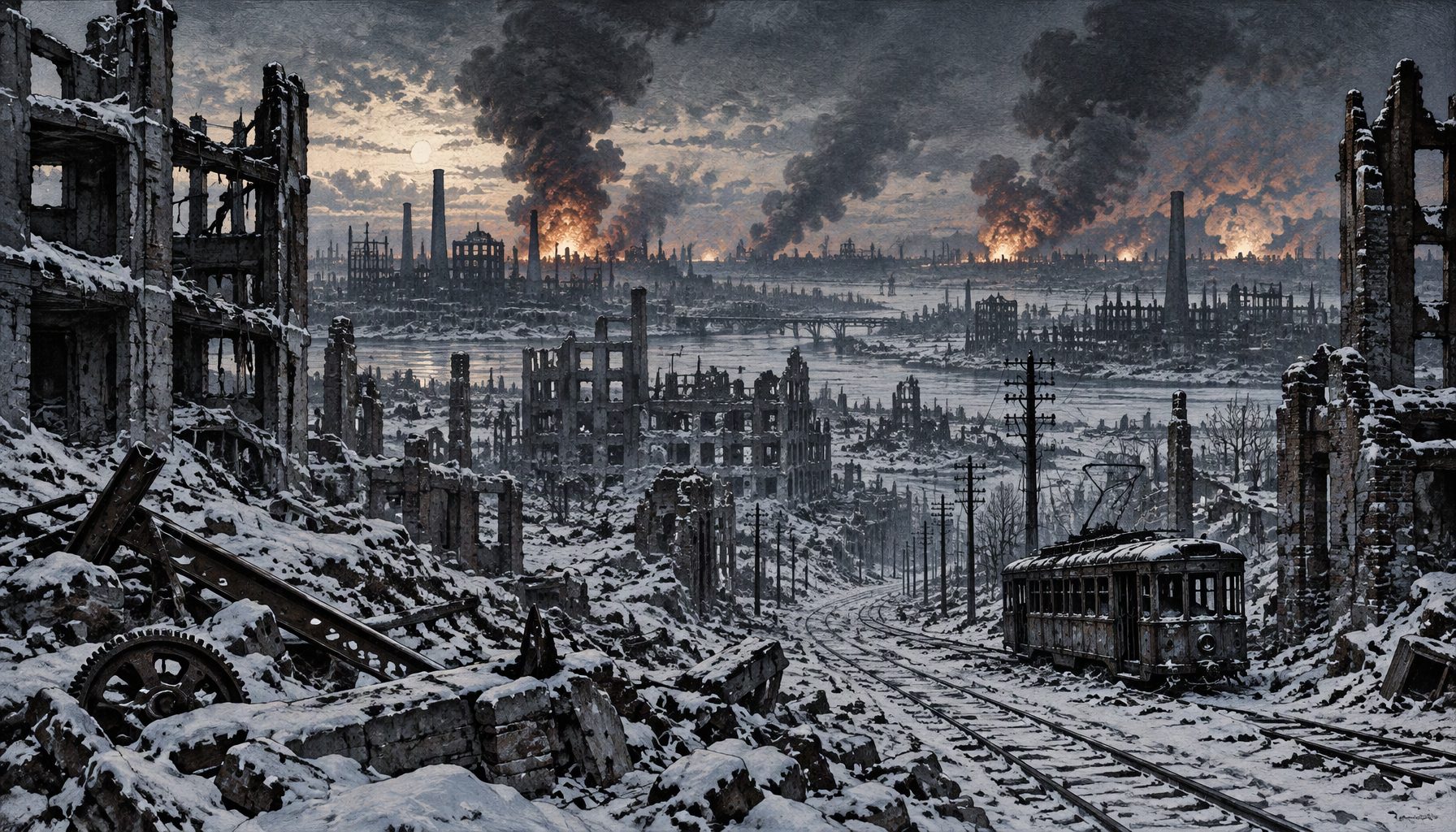
The Korean War caused immense destruction across the peninsula. Casualty estimates vary widely, but military and civilian deaths are estimated to have reached millions. Many cities were destroyed, industries halted, and farmland damaged. North Korea suffered severe infrastructure damage due to bombing, while South Korea lost many civilians and faced a refugee crisis.
The war also reinforced militarization in East Asia. The United States expanded its network of alliances, including security treaties with South Korea and Japan. China emerged as a new regional military power. For Korea, the war left trauma, separated families, and a tightly guarded border that persists to this day.
An Unfinished Legacy
After the armistice, South Korea developed into one of Asia's largest economies, while North Korea built a closed political system and a nuclear program. Tensions in the demilitarized zone remain high. Minor incidents, missile tests, and interrupted negotiations are part of the regional security landscape.
The Korean War is often referred to as the "Forgotten War" in the United States, although its impact is long-lasting. In Korea, the war remains alive in the memory of separated families and in border politics. To this day, there is no official peace treaty replacing the 1953 armistice.
Discussion
Comments
Comments are reviewed by an editor before they appear. Include sources when correcting facts.
No comments yet. Be the first to respond to this article.