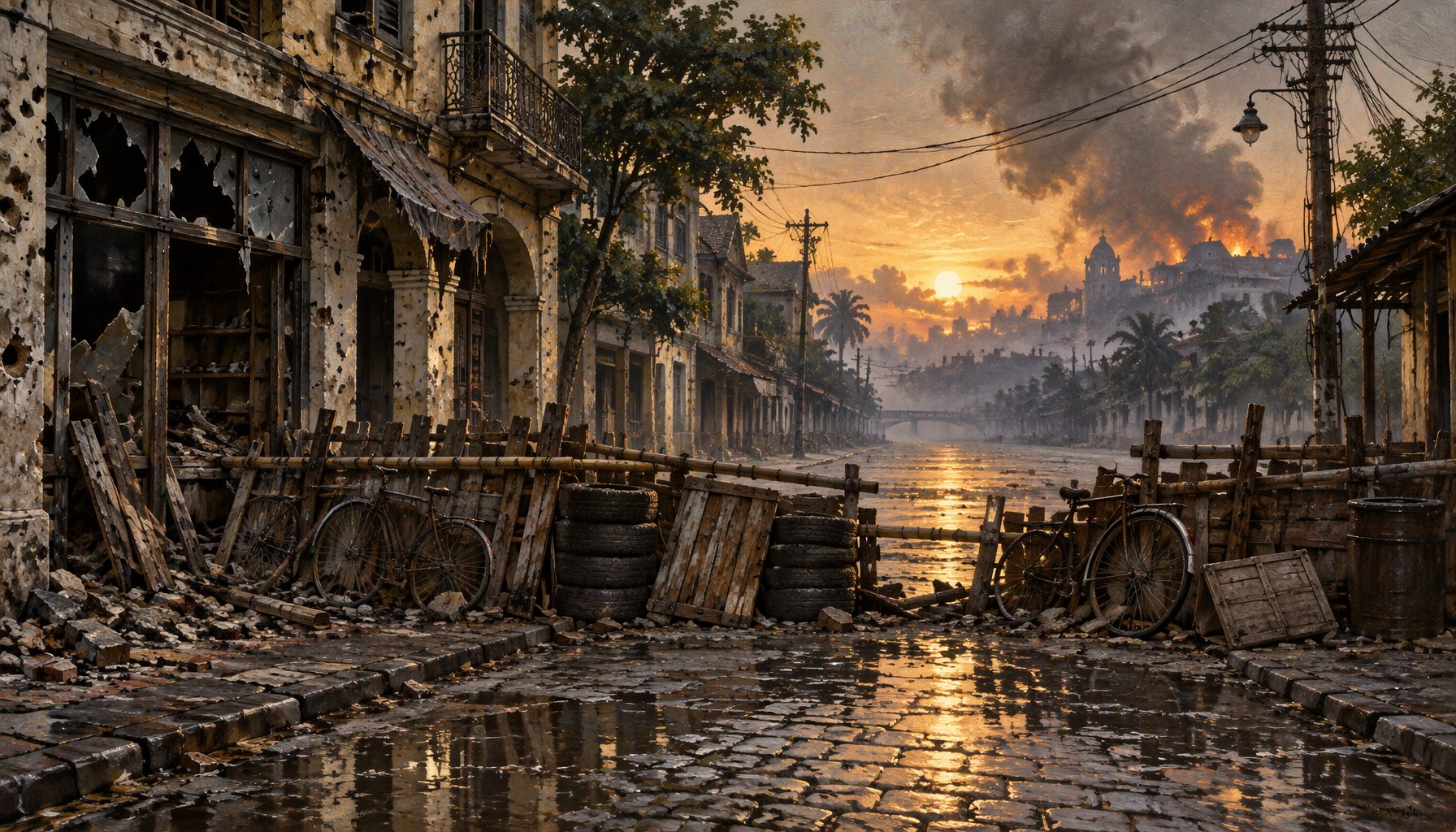
City After the Proclamation
After the Proclamation of Independence on August 17, 1945, the situation in Surabaya changed rapidly. The largest port city in East Java became the center of youth movements, political organizations, and armed groups. Former Peta soldiers, Heiho, and youth from various backgrounds formed fighting bodies with whatever weapons they had.
Surabaya also became a place of war prisoners and internees. Japanese forces were still in the city, while the Allies planned to arrive to disarm the Japanese and free the prisoners. The arrival of the Allies, led by the British, caused tension because many Indonesian fighters believed they had come to restore Dutch rule.
Arrival of British Forces
At the end of October 1945, British forces from the 23rd Indian Division landed in Surabaya under the command of Brigadier Aubertin Walter Sothern Mallaby. Their official task was to free Allied prisoners and disarm Japanese forces. However, their presence, along with the accompanying Dutch forces, sparked conflicts with Indonesian youth.
Tensions escalated after armed clashes in various parts of the city. Mallaby attempted to negotiate with Indonesian leaders, including President Sukarno who came to Surabaya. A ceasefire was agreed upon, but the situation on the ground remained tense and volatile.
Death of Brigadier Mallaby
On October 30, 1945, Brigadier Mallaby was killed near the Red Bridge. The British version states that he was shot by Indonesian fighters while in his car. The Indonesian version states that he died in a shootout triggered by provocation or misunderstanding. To this day, the details of the event are still debated.
Mallaby's death changed the attitude of the British side. The British command considered the incident a serious violation and sent additional troops. An ultimatum was prepared: all Indonesian fighters must surrender their weapons and sign a surrender statement, or the city would be attacked.
November 9 Ultimatum
On November 9, 1945, Major General Robert Mansergh issued an ultimatum addressed to all residents of Surabaya. All weapons must be surrendered by the latest at 6 am the next day. If not, British forces would attack the city without further warning. The ultimatum also ordered Indonesian leaders to surrender.
The ultimatum was rejected. The youth, ulama, and community organizations chose to fight back. Bung Tomo, through radio broadcasts, inspired the spirit of the people with a call to struggle. Mosques and Islamic boarding schools became centers of mobilization, while figures like KH Hasyim Asy'ari issued a call for jihad to defend independence.
November 10, 1945
On the morning of November 10, British forces launched a large-scale attack. Warships bombarded the city from the sea, while land forces moved with tank and air support. Indonesian resistance was organized in various groups, but their weapons were far simpler compared to the British forces.
The battle raged intensely for several days. British forces managed to control most of the city within about three days, but resistance continued for weeks. Fighters used guerrilla tactics, held out in villages, and carried out surprise attacks on British positions.
Casualties and Destruction
The number of casualties was never known for certain. It is estimated that between 6,000 and 16,000 Indonesian fighters and civilians were killed, while the British reported around 500 to 600 soldiers killed or missing. Thousands of people fled the city, and many buildings were destroyed due to the fighting and bombing.
Although militarily Surabaya was eventually controlled by the British, the resistance had a significant political impact. The international community saw that the people of Indonesia were willing to sacrifice for their independence. Diplomatic pressure and international public opinion made it increasingly difficult for the Dutch to claim that Indonesia was not ready for independence.
Heroes' Day
The Battle of Surabaya was later remembered as one of the most important events in the Indonesian National Revolution. In 1959, President Sukarno designated November 10 as Heroes' Day to honor the fallen fighters. To this day, the date is commemorated every year with ceremonies and historical education activities.
The story of Surabaya is not just about the battle, but also about the solidarity of the city's residents. Youth, ulama, traders, and women from various backgrounds participated in various forms of struggle. That spirit became part of Indonesia's national identity and a reminder that independence was obtained at a very high price.
Discussion
Comments
Comments are reviewed by an editor before they appear. Include sources when correcting facts.
No comments yet. Be the first to respond to this article.