Iran Under the Shah
Mohammad Reza Pahlavi became the Shah of Iran in 1941 after his father was forced to abdicate. Over several decades, he built a strong government with the support of the United States. Iran became one of Washington's main allies in the Middle East and received a large amount of military aid and technology.
In 1953, the government of Prime Minister Mohammad Mosaddegh was overthrown in a coup supported by the CIA and Britain after he nationalized the oil industry. The event strengthened the Shah's power but also left a long-lasting political wound. Since then, opposition to the Shah has often been linked to the rejection of foreign interference.
Modernization and Disparity
In 1963, the Shah launched a reform program called the White Revolution. The program included land reform, granting voting rights to women, industrial development, and educational modernization. Its aim was to transform Iran into a modern nation and reduce the influence of traditional groups.
However, modernization was not evenly distributed. Oil wealth surged after the 1973 oil crisis, but corruption and disparity also grew. In large cities, modern lifestyles coexisted with poverty. Many farmers moved to the cities and lived in slums, while some merchants and clerics felt marginalized.
Religious Opposition
Ayatollah Ruhollah Khomeini became one of the most vocal critics of the Shah. In 1963, he opposed the reform program and policies deemed to undermine Islamic values. He was arrested and then exiled, spending years in Iraq and France. Although far from Iran, his influence remained strong through a network of clerics and underground organizations.
Opposition to the Shah did not come only from religious groups. Students, intellectuals, workers, and political organizations also protested against repression and disparity. However, religious groups had a wide network of mosques and social organizations, enabling them to mobilize large masses.
Protest Wave of 1978
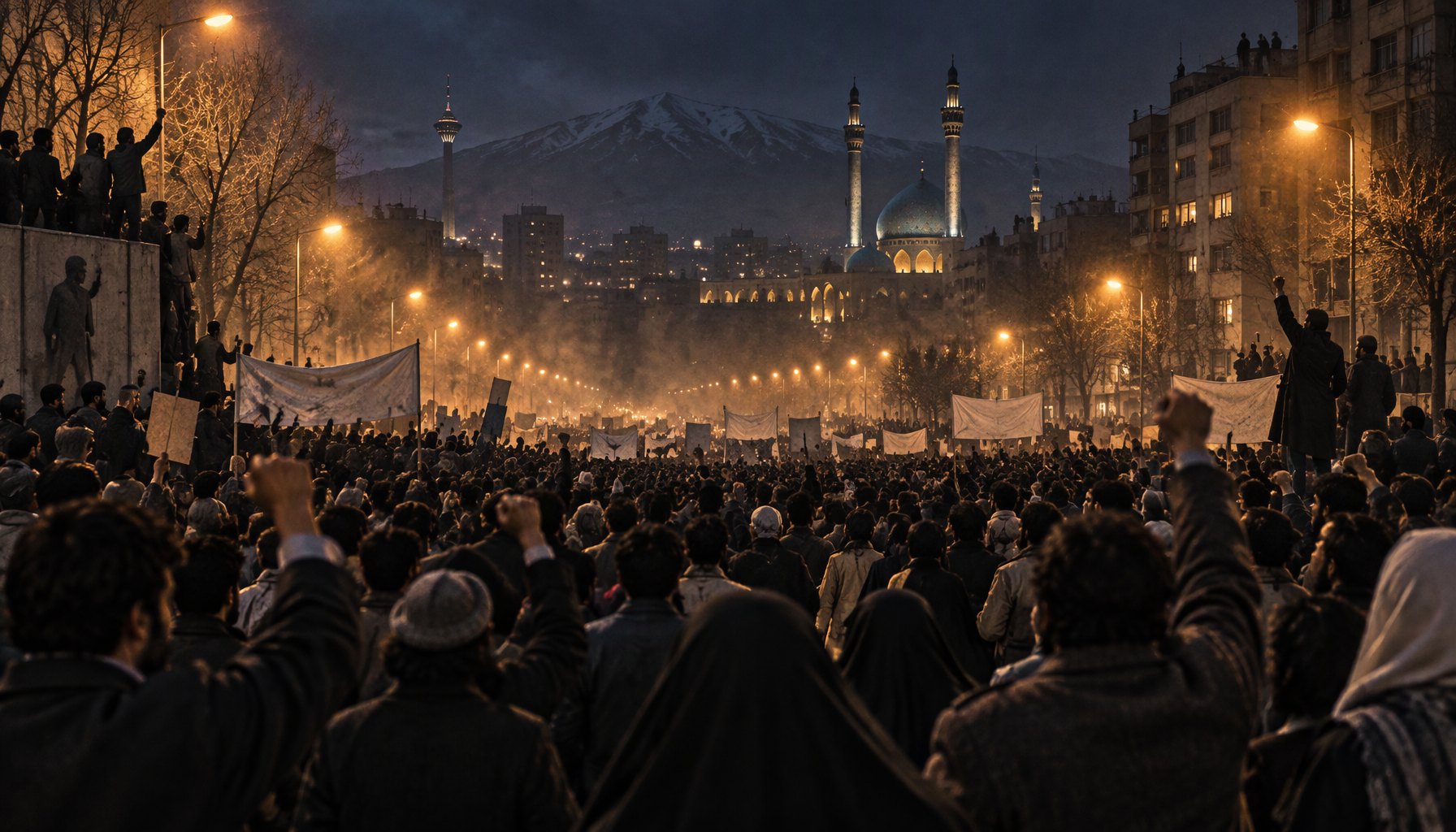
In January 1978, an article insulting Khomeini sparked protests in Qom. Police shot at demonstrators, and news of the victims spread throughout the country. Protests spread to other cities, especially on the 40-day anniversary of the victims' deaths, which became a strong cycle of mobilization.
In August 1978, a fire at the Rex Cinema in Abadan killed hundreds of people. The government blamed radical groups, while the opposition accused Savak, the Shah's secret police. The event increased public anger. In September, security forces shot at demonstrators in Tehran in an event known as Black Friday, and the wave of protests grew larger.
The Fall of the Shah
By the end of 1978, labor strikes paralyzed the oil industry and the economy. Massive demonstrations took place in Tehran and other cities. The army began to face desertion and doubt, while the government failed to take effective steps to quell the crisis. The Shah tried to appoint a new government, but could not stop the protests.
On January 16, 1979, the Shah left Iran for the last time. Prime Minister Shapour Bakhtiar tried to form an interim government, but did not have enough support. Khomeini returned to Iran on February 1, 1979, and was greeted by a very large crowd. On February 11, the military declared neutrality and the revolution won.
The Islamic Republic
On April 1, 1979, a referendum resulted in majority support for the establishment of the Islamic Republic. A new constitution was ratified by the end of 1979, establishing a government system that combines elements of democracy and theocracy. Khomeini became the Supreme Leader with extensive powers, while the president and parliament were elected through general elections.
The new regime carried out purges against political groups that previously supported the revolution, including leftists and secular nationalists. Many opposition figures were arrested, exiled, or executed. The revolution, which initially involved a broad coalition, turned into a system dominated by religious groups and Khomeini's supporters.
Hostages and Conflict
On November 4, 1979, a group of students seized the U.S. Embassy in Tehran and took several diplomats hostage. The hostage crisis lasted 444 days and damaged Iran's relations with the United States. The event strengthened the position of hardline groups domestically and became a symbol of resistance to foreign influence.
In 1980, Iraq invaded Iran, starting a war that lasted eight years. The Iran-Iraq War resulted in a very high death toll and economic destruction. The conflict also strengthened militarization and state control over society, shaping the political identity of the Islamic Republic to this day.
Legacy
The Iranian Revolution changed the balance of power in the Middle East. Iran became a regional power challenging the United States and its allies, and supporting groups in Lebanon, Iraq, Syria, and Yemen. The revolution also inspired political Islamic movements in various countries, although its impact varied.
Domestically, the Islamic Republic faced economic challenges, international sanctions, and social tensions. Women, youth, and minority groups continued to advocate for their rights. The 1979 Revolution remains one of the most important events in modern Iranian and Middle Eastern history.
Discussion
Comments
Comments are reviewed by an editor before they appear. Include sources when correcting facts.
No comments yet. Be the first to respond to this article.