A Divided City
After World War II, Germany was divided into Allied occupation zones, and Berlin, which was within the Soviet zone, was also divided into four sectors. In 1949, two German states were established: the Federal Republic of Germany in the west and the German Democratic Republic in the east. West Berlin became a special area surrounded by East Germany.
During the 1950s, hundreds of thousands of East German citizens moved to West Germany through Berlin. They sought better political and economic freedom. For the East German government, this exodus was considered a serious threat as it drained skilled labor and undermined the state's legitimacy.
The Night of August 13, 1961
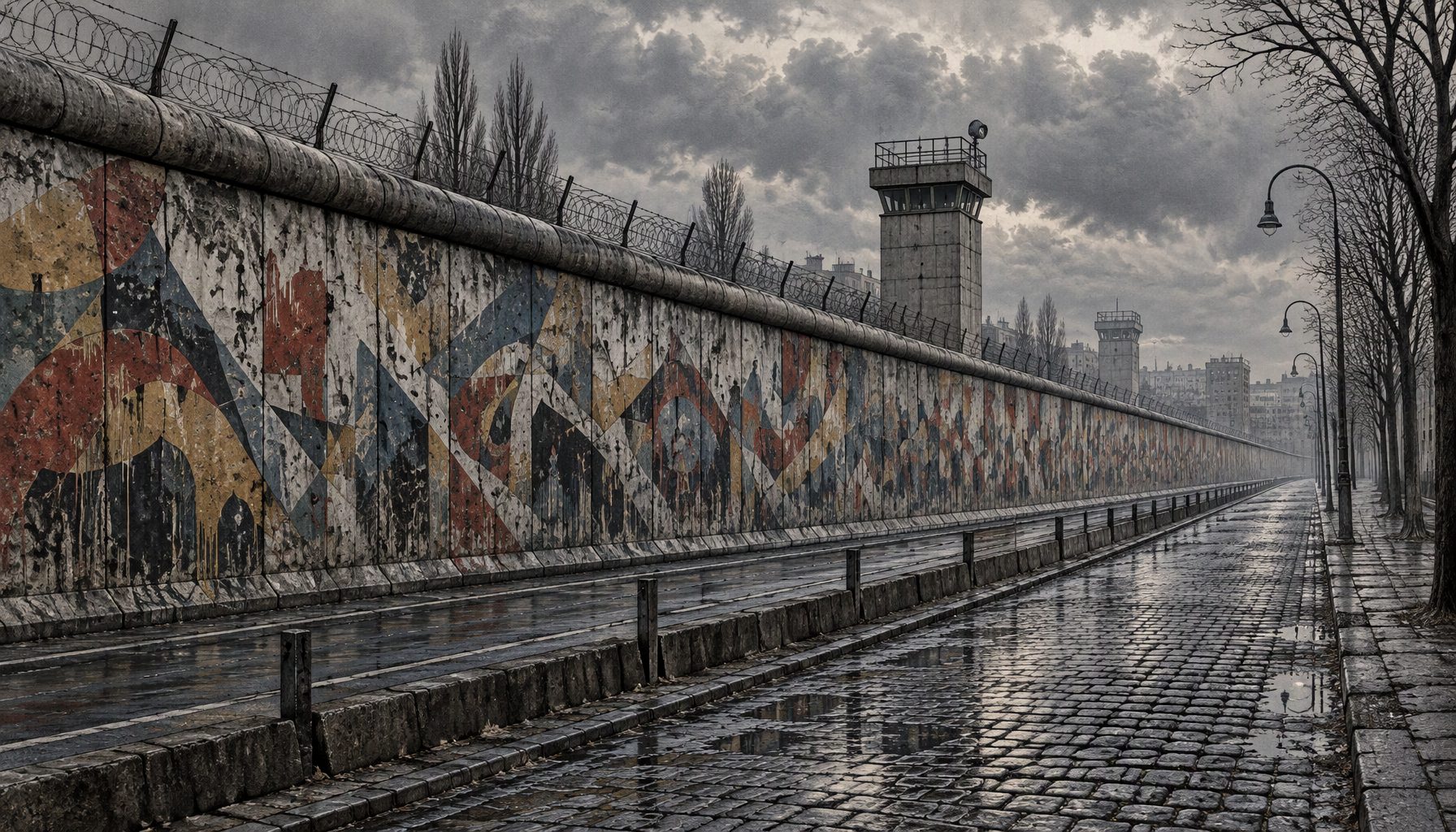
On the night of August 12-13, 1961, East German forces sealed the border between East Berlin and West Berlin. Barbed wire was installed, roads were blocked, and train stations were checked. Within a few months, concrete walls replaced the barbed wire. The East German government called it an "anti-fascist protective wall," while the world knew it as the Berlin Wall.
The wall stretched about 155 kilometers, with a 43-kilometer section dividing the city center. It was equipped with watchtowers, lights, mines, and sand tracks to detect footprints. Families and friends living on opposite sides could not meet without special permission.
A Symbol of the Cold War
The Berlin Wall became the strongest symbol of the Cold War. In June 1963, U.S. President John F. Kennedy delivered a speech in West Berlin, expressing solidarity with the city's inhabitants. The visit reaffirmed that West Berlin was a frontline in the ideological competition between the Western bloc and the Soviet bloc.
On the other hand, the wall also served as evidence of the failure of East Germany's claims about freedom. Every attempt to cross the border carried the risk of death. Historical research records at least 140 people died at the Berlin Wall, although the exact number is still debated due to many cases not being fully documented.
A Swift Collapse
In 1989, waves of reform in Eastern Europe weakened the communist regime. Hungary opened its border with Austria in May 1989, allowing East German citizens to escape through there. Large demonstrations demanding change took place in various East German cities, especially Leipzig.
On November 9, 1989, Politburo spokesman Günter Schabowski held a press conference about new travel rules. When asked when the rules would take effect, he replied "immediately" without detailed explanation. The news was broadcast on television, and thousands of people gathered at the checkpoints. Unclear instructions led the guards to eventually open the gates, and citizens from both sides began to cross.
After the Wall
Within a few months, the wall was demolished, and its pieces became souvenirs and symbols of freedom. On October 3, 1990, East Germany joined West Germany, and Germany was reunified. However, the reunification did not erase the economic and social differences that had formed over several decades.
The Berlin Wall is now studied as an example of how seemingly solid policies can quickly collapse when social pressure, political change abroad, and communication errors converge. It also serves as a reminder of the price of freedom and the importance of reconciliation after conflict.
Discussion
Comments
Comments are reviewed by an editor before they appear. Include sources when correcting facts.
No comments yet. Be the first to respond to this article.