An Unsuccessful Painter Seeking Fame
Han van Meegeren was born in Deventer in 1889 and studied art in Den Haag. He wanted to be a great painter, but his classical style did not match the development of modern art in the 1920s and 1930s. Critics considered his work outdated, and his ambitions were not realized.
This failure caused anger. Van Meegeren hated the world of critics and art dealers whom he believed ignored him. From this resentment, a much more dangerous plan was born: to prove that experts could not distinguish great works from forgeries he created himself.
A Non-Existent Vermeer
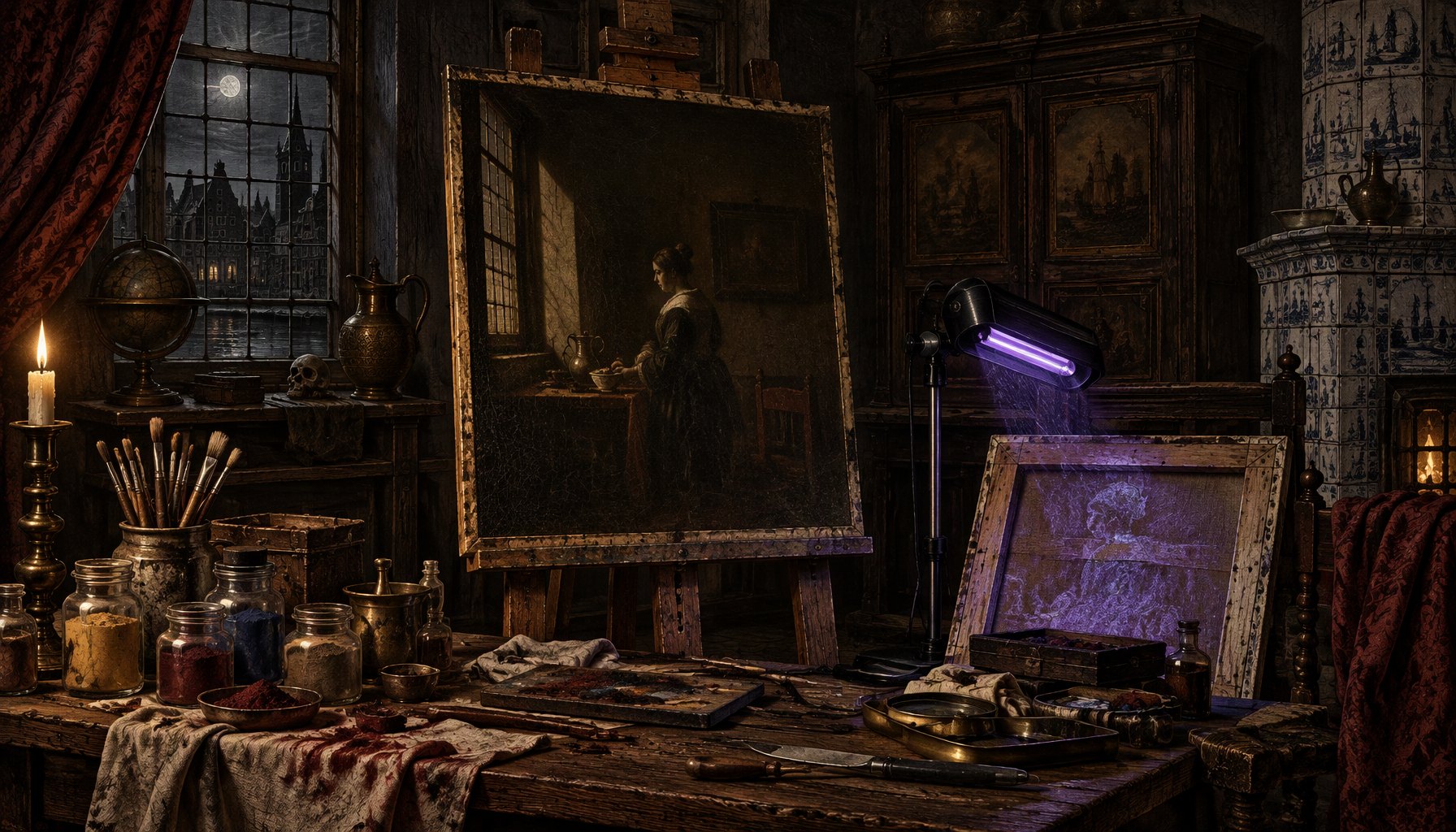
Van Meegeren chose Johannes Vermeer, a 17th-century painter whose works were highly valued but few in number. He studied Vermeer's techniques, materials, and style for years. To make the paintings look old, he used appropriate oils and pigments, then heated the paintings so the paint would harden and crack. He also added layers of varnish and artificial dirt.
One of his tricks was using materials unknown in the 17th century but still passed early testing. His forgeries were made with a mixture containing synthetic resin. At that time, methods of material analysis were not as strict as they are now, so the paintings could pass visual inspection and simple tests.
Emmaus and Bredius' Recognition
In 1937, Van Meegeren introduced the painting The Supper at Emmaus to Abraham Bredius, a highly respected Vermeer expert. Bredius stated that the painting was an original work and called it one of Vermeer's greatest masterpieces. This recognition opened the door to wide acceptance in the art world.
The painting was then purchased by the Museum Boijmans in Rotterdam at a high price. Van Meegeren created a series of other "new Vermeers," including Christ with the Adulteress. In 1942, during the German occupation of the Netherlands, the painting was sold through the intermediary Alois Miedl to Hermann Göring, one of the highest-ranking Nazi officials known for collecting artworks.
Arrest After the War
After the Netherlands was liberated in 1945, authorities investigated collaboration with the German occupation. Van Meegeren was arrested for allegedly selling a valuable Vermeer painting to Germany. This charge could result in a severe punishment, even the death penalty.
To defend himself, he made a shocking confession: the painting sold to Göring was not a work by Vermeer, but a forgery he had created. Initially, no one believed him. A failed ordinary painter could not possibly deceive prominent experts for years.
Painting in Detention
To prove his ability, Van Meegeren was asked to paint a new "Vermeer" in front of investigators. In his cell, he created The Young Christ Teaching in the Temple. This painting convinced the authorities that his confession was true, although the public and some experts still doubted him.
After that, scientific examinations were conducted on the paintings he claimed were forgeries. Analysis found synthetic materials that could not have existed in the 17th century. Certain pigments and resins were only known in the 20th century. This technical evidence strengthened Van Meegeren's confession.
Trial and Final Days
In 1947, Van Meegeren was put on trial not for treason, but for forgery and fraud. He was found guilty and sentenced to one year in prison. However, his health deteriorated during the trial. He died on December 30, 1947, before serving most of his sentence.
His case became an important lesson for the art world. After the scandal, museums and auction houses strengthened verification methods, including pigment analysis, X-ray examination, and provenance research. Van Meegeren's story also shows that even an expert's recognition can be wrong if material evidence is not carefully examined.
Hero or Fraudster?
Some people view Van Meegeren as a folk hero who humiliated the Nazis and arrogant experts. However, this view is too simplistic. He deceived museums, collectors, and the public for years, and exploited others' trust for personal gain.
What makes his case memorable is the irony: a failed painter became famous for works not acknowledged as his own. To this day, some of his forgeries are still displayed as historical evidence of art forgery, not as great works.

Discussion
Comments
Comments are reviewed by an editor before they appear. Include sources when correcting facts.
No comments yet. Be the first to respond to this article.