First Female Pilot
Amelia Earhart was born in Atchison, Kansas, in 1897. She became interested in aviation after seeing an aircraft at a fair in 1920. In 1921, she began learning to fly and bought her first plane. She became one of the first women to obtain a pilot's license from the International Aeronautical Federation.
In 1928, Earhart became the first woman to fly across the Atlantic Ocean as a passenger, although she felt she had not truly flown the plane herself. In 1932, she flew solo across the Atlantic and became the first woman to do so. In 1935, she flew solo from Hawaii to California, a route that had previously claimed the lives of many pilots.
Circumnavigating the World
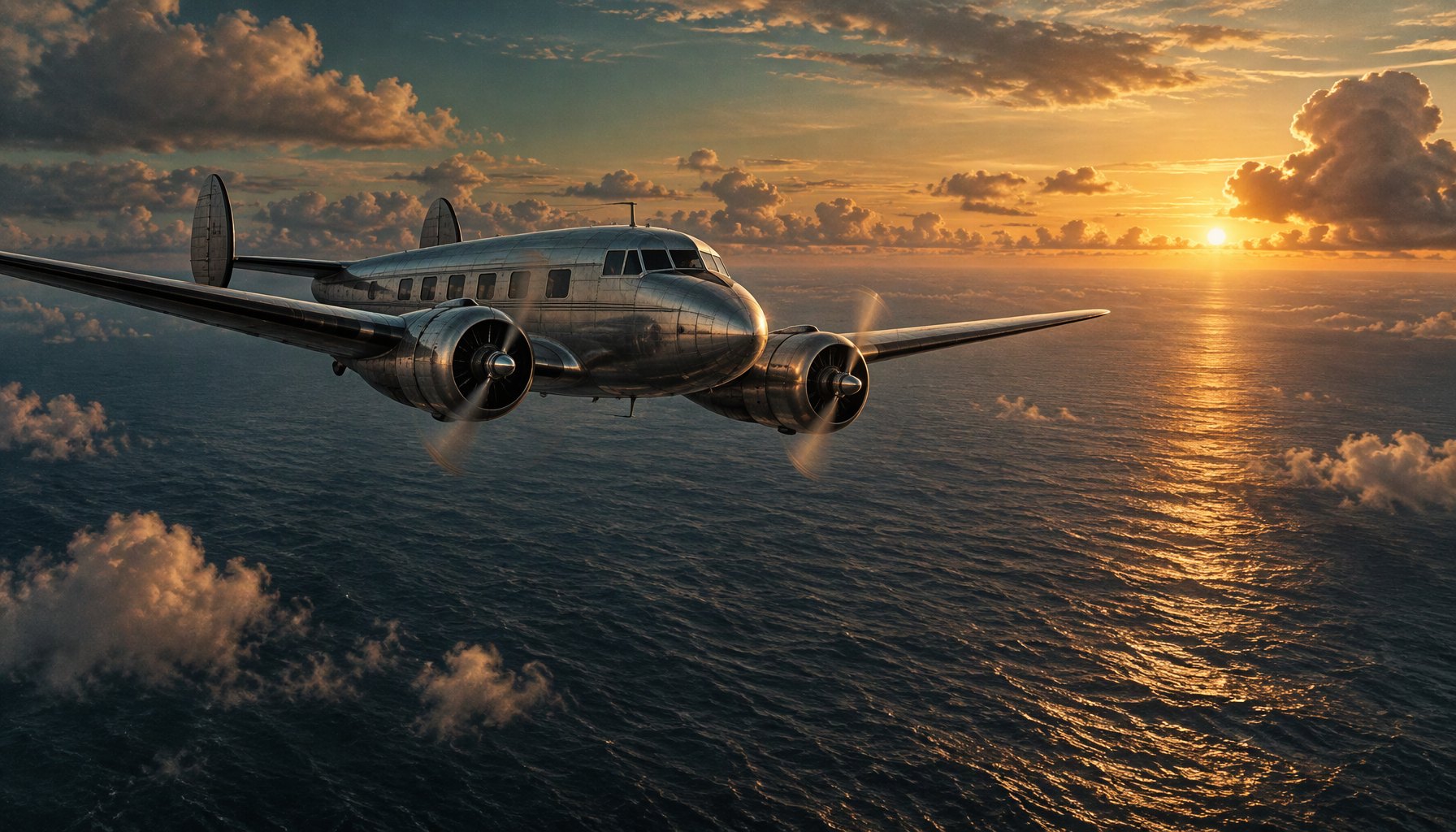
In 1937, Earhart decided to undertake a flight around the world. She used a modified Lockheed Electra 10E, with financial support from Purdue University. Navigator Fred Noonan accompanied her on the journey. The chosen route moved from west to east, crossing America, Africa, Asia, and the Pacific.
The journey lasted for more than a month and covered approximately 35,000 kilometers. Earhart and Noonan successfully traversed South America, Africa, India, and Southeast Asia. By the end of June 1937, they arrived in Lae, Papua New Guinea, for the final leg to Howland Island in the central Pacific.
Final Day
On July 2, 1937, Earhart and Noonan took off from Lae bound for Howland, a distance of approximately 4,100 kilometers. Howland was a small island that was difficult to find, only a few kilometers long. To assist with navigation, the American coast guard ship, Itasca, was stationed near the island.
Bad weather and thick clouds hindered navigation. Earhart sent several radio messages, but communication was unstable. The last message received mentioned that the fuel was almost exhausted. After that, there was no further contact. The plane never arrived at Howland, and there is no evidence indicating the exact location of its disappearance.
Signals and Search
The Itasca ship attempted to communicate with Earhart but experienced difficulties due to frequency differences and signal interference. Several radio signals received after the plane should have run out of fuel raised hopes, but the source of the signals could not be confirmed. Many signals may have originated from other sources.
An official search was conducted by the U.S. Navy for more than two weeks. The search area covered approximately 250,000 square miles, including Howland, the Phoenix Islands, and the surrounding waters. The search did not find any wreckage or convincing evidence. The Navy ultimately concluded that Earhart and Noonan were lost at sea.
Theories of Disappearance
The simplest theory is that the plane ran out of fuel and crashed into the sea. This theory is supported by the last message about dwindling fuel and the absence of evidence of an emergency landing. However, this theory does not explain why no wreckage was found, although the sea in the area is very vast and deep.
Another theory suggests that Earhart landed on Nikumaroro, an uninhabited atoll in the Phoenix Islands. The TIGHAR group, which investigates this theory, has found artifacts believed to be related to Earhart, including metal fragments and personal items. However, no confirmed parts of the plane have been found, and the evidence remains debated.
Evidence on Nikumaroro
In 1940, a worker on Nikumaroro found human bones and several items, including parts of a shoe and a navigation box. The bones were later lost, so modern analysis could not be fully conducted. Some reports mention that the bones belonged to a woman, but positive identification was never achieved.
TIGHAR expeditions in the 1990s and 2000s found several artifacts on the atoll, including aluminum fragments, buttons, and items that may have come from the plane. In 2018, analysis of animal bones and other items produced new claims, but the scientific community still demands stronger evidence before accepting the Nikumaroro theory.
Reports and Debates
The U.S. government officially concluded that Earhart and Noonan were lost at sea. However, there is no official report that clearly explains the cause of the accident. Various books, documentaries, and amateur investigations continue to try to solve this mystery.
The theory of capture by Japan has also been proposed, with claims that Earhart landed in the Marshall Islands and was detained. This theory is not supported by strong archival evidence. Some other claims, including a photograph allegedly showing Earhart on Saipan, have been refuted as misidentifications.
Legacy
Amelia Earhart became a symbol of courage and women's advancement in aviation. She founded the women pilots' organization, The Ninety-Nines, and supported women's education. Her name is commemorated in schools, airports, and various awards.
The mystery of Earhart's disappearance also highlights the risks of aviation in the era before satellite navigation and modern communication. Her story combines achievement, tragedy, and uncertainty that continues to captivate public attention. To this day, the question of what happened on July 2, 1937, remains unanswered with certainty.


Discussion
Comments
Comments are reviewed by an editor before they appear. Include sources when correcting facts.
No comments yet. Be the first to respond to this article.