A Secretly Initiated Project
The atomic bomb dropped on Japan was the result of the Manhattan Project, a secret U.S. program that took place during World War II. Under the military leadership of General Leslie Groves and the scientific leadership of Robert Oppenheimer, thousands of researchers worked at Los Alamos and other facilities to produce the first nuclear weapon.
The first test was conducted in the New Mexico desert on July 16, 1945, with the code name Trinity. The explosion proved that the designed weapon could detonate with the power of tens of kilotons. After that, the U.S. military prepared to use the bomb against Japan, which was still at war despite its increasingly desperate position.
July 1945: Narrowing Choices
On July 26, 1945, the Allies issued the Potsdam Declaration, demanding Japan's unconditional surrender or facing "prompt and utter destruction." Japan had not given an official response. On August 6 and 9, two atomic bombs were dropped. The Soviet Union also declared war on Japan on August 9 and invaded Manchuria.
President Harry Truman approved the use of the bomb with the reasoning of hastening the end of the war and avoiding a land invasion of Japan. The planned invasion of Kyushu, codenamed Operation Olympic, was scheduled for November 1945. Estimates of casualties for the invasion varied widely, from tens of thousands to over a million, depending on the assumptions used.
August 6, 1945: Hiroshima
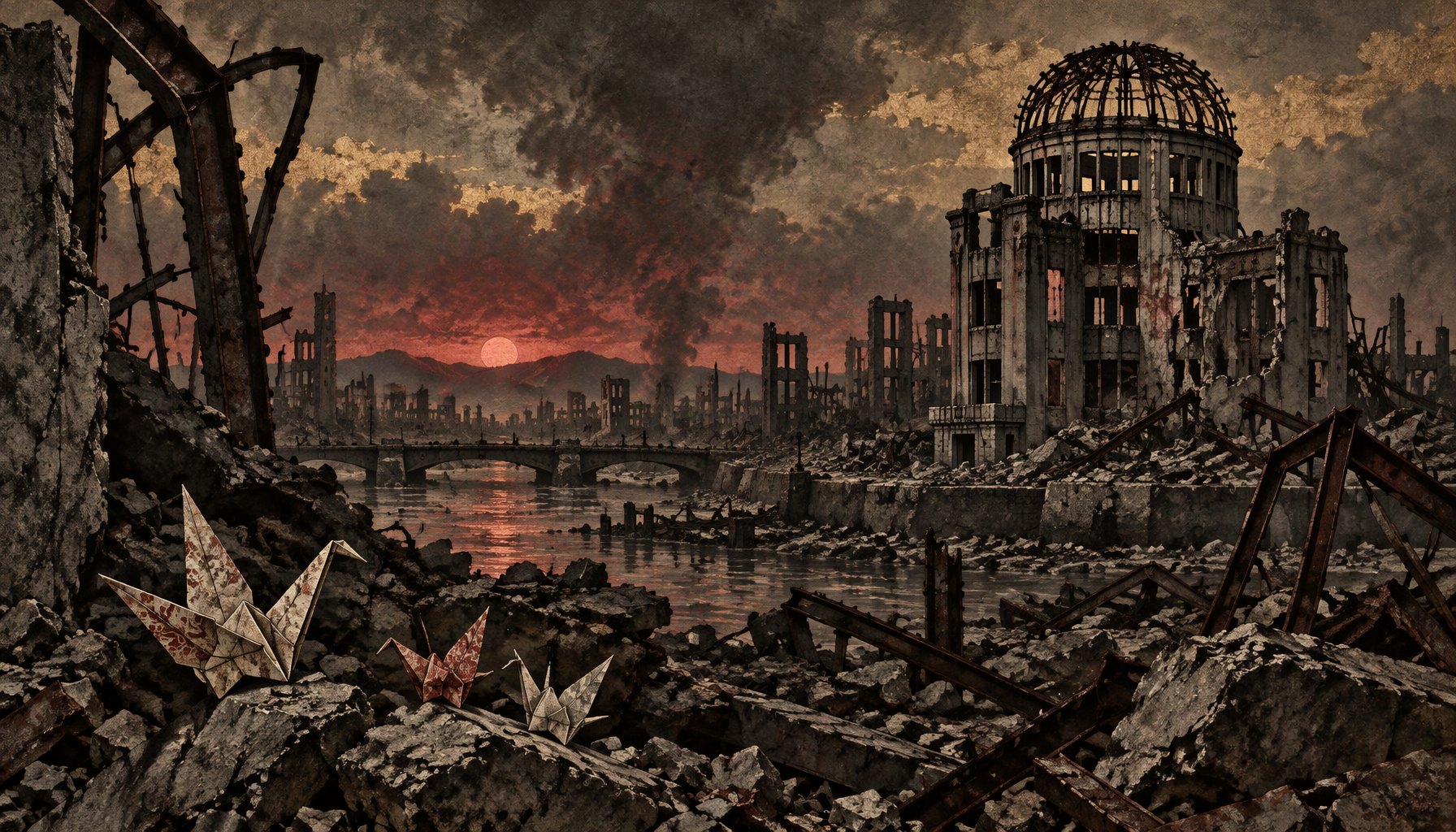
At 8:15 local time, a B-29 aircraft named Enola Gay dropped a uranium bomb named Little Boy over Hiroshima. The explosion occurred about 600 meters above the city. Approximately 70,000 to 80,000 people died instantly or in the first hours. Wooden buildings collapsed, and fires spread rapidly.
By the end of 1945, the estimated death toll from the blast, burns, and radiation sickness reached about 140,000 people. Many of the victims were civilians, including children and forced laborers from Korea. The building now known as the Genbaku Dome was preserved as a memorial.
August 9, 1945: Nagasaki
Three days later, a B-29 aircraft named Bockscar dropped a plutonium bomb named Fat Man over Nagasaki. The original target was Kokura, but thick clouds caused the plane to be redirected to Nagasaki. The city's hilly topography limited the blast range, but the damage was still enormous.
The estimated death toll by the end of 1945 was about 70,000 people. Japan announced its surrender on August 15, and the surrender documents were signed aboard the USS Missouri on September 2, 1945. The war in Asia ended.
Why Necessary or Not
The traditional view states that the atomic bomb saved lives by preventing a land invasion that would have caused many casualties on both sides. Supporters refer to Japan's fierce resistance at Iwo Jima and Okinawa, as well as military preparations to defend the homeland.
The revisionist view emphasizes that Japan was already seeking a way to surrender through the Soviet Union and that the Soviet entry into the war was more decisive in Japan's decision. Historians like Tsuyoshi Hasegawa argue that the two events, the atomic bomb and the Soviet attack, together shook Japan's leadership. Other historians, such as J. Samuel Walker, assess that the bombing is morally difficult to justify and militarily not fully necessary, but acknowledge that the alternatives were also uncertain.
Survivors
Survivors of the bomb are called hibakusha. They faced radiation-related illnesses, burns, loss of family, and social discrimination in the following years. Many hid their status for fear of being shunned. During the U.S. occupation, censorship limited coverage of radiation effects.
Since the 1950s, hibakusha have organized to demand recognition and medical assistance. Their testimonies have become an important part of the global anti-nuclear movement. In 2017, the Treaty on the Prohibition of Nuclear Weapons was adopted at the UN, although nuclear-armed countries did not join.
An Unfinished Legacy
Hiroshima and Nagasaki are not just two military events, but also turning points in human history: for the first time, nuclear weapons were used in war. The debate about the morality and necessity of the bombing will continue as long as new documents are opened and the testimonies of survivors can still be heard.
What cannot be denied is the scale of civilian suffering. Amid strategic debate, their voices, those who were beneath the blast, are often drowned out. A honest history must contain both: the reasons of the decision-makers and the reality experienced by those beneath them.
Discussion
Comments
Comments are reviewed by an editor before they appear. Include sources when correcting facts.
No comments yet. Be the first to respond to this article.