The Cold War in Southeast Asia
In the early 1960s, the United States became increasingly involved in the conflict in Vietnam. After France withdrew from Indochina, Vietnam was divided into communist North Vietnam and US-backed South Vietnam. The US government sent military advisors and economic aid but avoided large-scale open warfare.
At sea, US warships conducted signal collection patrols in the Gulf of Tonkin, off the coast of North Vietnam. The operation was named DESOTO and aimed to monitor communications and naval movements of North Vietnam. These patrols were conducted in waters considered international but close to areas claimed by North Vietnam.
August 2, 1964
On August 2, 1964, the destroyer USS Maddox was on patrol when three North Vietnamese torpedo boats approached and fired torpedoes. Maddox returned fire and requested air support from the aircraft carrier USS Ticonderoga. One of the torpedo boats sank, and Maddox sustained minor damage with no casualties.
The first incident was real and documented. The US government sent a warning message to North Vietnam and added the destroyer USS Turner Joy to the area. Washington also stated that patrols would continue, although there were concerns that the action could provoke a larger confrontation.
Claim of August 4 Attack
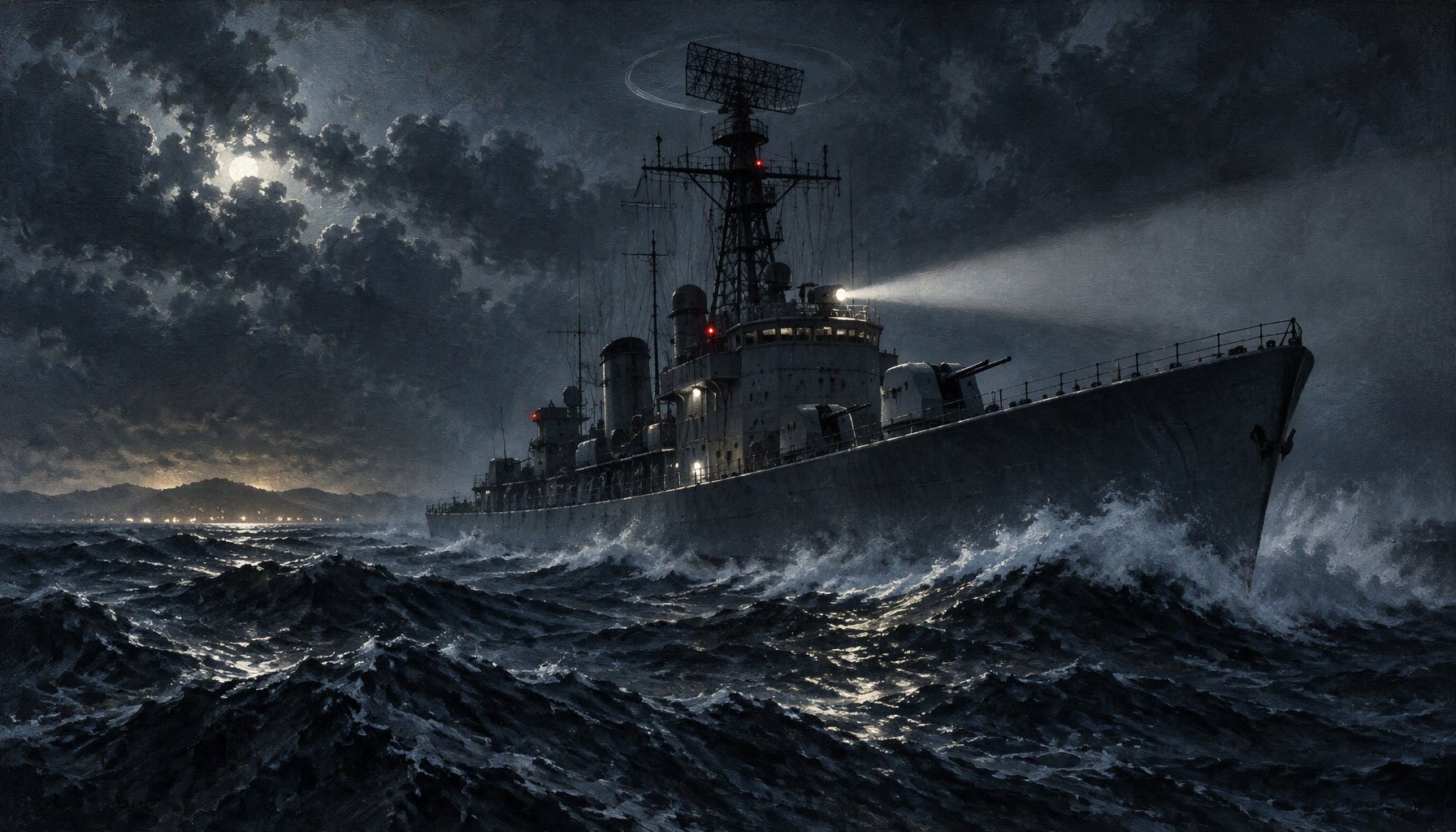
On the night of August 4, the crews of Maddox and Turner Joy reported radar and sonar signals allegedly from a new torpedo attack. Bad weather, high waves, and imperfect equipment made identification difficult. Although some later reports questioned the attack, field commanders relayed it to Washington as a real attack.
President Lyndon B. Johnson addressed the American people on the night of August 4, announcing that US ships had been attacked in international waters. He ordered retaliatory strikes against North Vietnamese installations and ships. The operation, called Pierce Arrow, was launched on August 5.
The Gulf of Tonkin Resolution
On August 7, 1964, the United States Congress passed the Gulf of Tonkin Resolution with nearly unanimous support: 88–2 in the Senate and 416–0 in the House of Representatives. The resolution gave the President authority to take “all necessary measures” to protect US forces and prevent further aggression in Southeast Asia.
The resolution became the legal basis for the large-scale escalation of the Vietnam War. In 1965, Johnson sent ground combat troops and began systematic bombing of North Vietnam. Without the resolution, the US government would have faced much greater political and constitutional obstacles to expanding the war.
The Truth Uncovered
Doubts about the August 4 attack arose from the beginning. Some military and intelligence officials reported that the evidence was unconvincing, but the report did not change the President's decision. In 2005, the National Security Agency (NSA) declassified an internal report compiled by historian Robert Hanyok. The report concluded that there was no torpedo attack on August 4, 1964.
Hanyok found that intelligence signals had been misinterpreted and that some questionable information was not conveyed to decision-makers. He also noted that early reports tended to confirm the assumption of an attack rather than critically examining it. This revelation strengthened the view that the escalation of the Vietnam War was based on a false premise.
Impact and Legacy
The Gulf of Tonkin incident showed how uncertain intelligence can be used to justify major political decisions. The resolution was later repealed in 1970, but the war had been going on for years and had claimed tens of thousands of lives. The debate over who knew what and when continues to this day.
For historians, this case has become an important study of the relationship between the military, intelligence, and politics. It also serves as a warning about the dangers of accepting field reports without sufficient verification, especially when the decisions made have major and irreversible consequences.



Discussion
Comments
Comments are reviewed by an editor before they appear. Include sources when correcting facts.
No comments yet. Be the first to respond to this article.