First Attempt That Failed
In 1584, Queen Elizabeth I granted Walter Raleigh the right to establish an English colony in North America. Early expeditions explored the coast that is now North Carolina and encountered Native Americans on Roanoke Island. In 1585, about one hundred settlers led by Ralph Lane attempted to settle there, but relations with the locals deteriorated. They eventually returned with Francis Drake in 1586.
The failure did not stop Raleigh's plans. He organized a new expedition aimed at establishing a permanent settlement, this time with families, not just a garrison. Its leader was John White, a painter and observer who had previously joined the expedition.
New Settlement in 1587
The expedition departed in 1587 with three ships and about 115 settlers, including women and children. They were actually asked to settle in Chesapeake Bay, which was considered safer. However, the ship's pilot, who worked for Raleigh, changed course and brought the group to the abandoned Roanoke.
There, on August 18, 1587, Virginia Dare was born, the daughter of Ananias Dare and Eleanor White. She is recorded as the first English child born in North America. However, this happiness did not last long. Supplies dwindled and relations with the Native Americans became strained after a misunderstanding and an attack.
John White's Return
The settlers asked John White to return to England to take supplies. He initially refused because he knew the journey was risky, but he finally departed at the end of 1587. Before leaving, he arranged an emergency signal: if the settlers moved, they should carve the name of their destination on a tree or post; if they were forced to leave, they should add a cross.
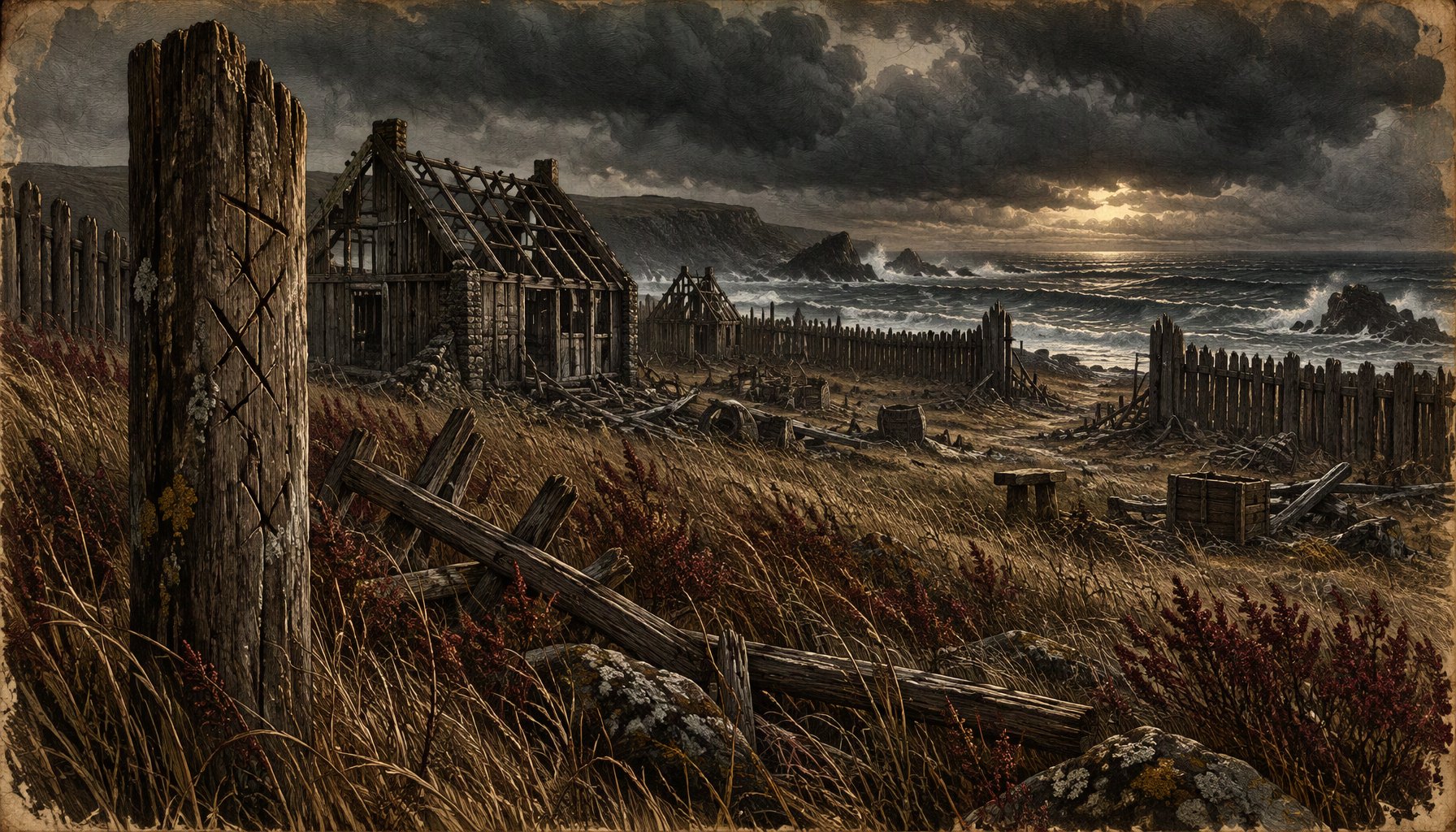
The Anglo-Spanish War and the Spanish Armada in 1588 occupied all English ships for defense. White could not return for nearly three years. When he finally arrived at Roanoke on August 18, 1590, he found the settlement dismantled. The houses were dismantled neatly, not destroyed, and certain items were missing.
Two Words Remaining
On one of the fence posts, the letters C, R, O, and A were found carved, while on a nearby tree was carved CROATOAN. There was no cross, the sign promised by the settlers if they left because they were forced to. For White, this meant hope: the settlers might have moved to Croatoan Island, the home of their allies, the Croatoan and Manteo tribes.
White wanted to go there immediately, but bad weather and ship damage forced the group to return to England. He never returned to America. His letters later became one of the main sources about the event, although he himself never knew the fate of his family.
Developing Theories
Since the 16th century, various theories have been proposed. The most popular theory is that the colonists assimilated with the Croatoan or other tribes around Hatteras. Other theories mention attacks by Powhatan or other tribes, disease epidemics, or killings by Spanish troops patrolling the coast.
There are also stories recorded by John Smith and William Strachey in the early 17th century about fair-haired people in Native American territory. However, the physical evidence is weak. In 1937, a carved stone claimed to be from the Roanoke colony was found, but it was later proven to be fake.
Modern Archaeological Evidence
Archaeological research on Roanoke Island in the 1990s discovered several items from the colonial period, including ceramics and metal tools. In 2012, excavations at a site called Site X in Hatteras found artifacts indicating the presence of Europeans at the end of the 16th century, supporting the idea of a move south.
In 2015, researchers from the British Museum discovered a hidden symbol on a map drawn by John White. The symbol marks the location of a fort on the mainland, possibly in Bertie County. Excavations there found pottery and metal fragments from the same period, but there is still no conclusive evidence.
Why It Remains a Mystery
Without written records from the settlers themselves, all reconstructions depend on indirect clues. There are no large numbers of human remains at the site, no notable valuable items left behind, and no clear boundary between voluntary relocation and disaster.
Today, Roanoke is known as the "lost colony". Its story has become the subject of novels, films, and historical tourism. For archaeologists, the question is not just where the settlers went, but how they interacted with the Native Americans and how colonial power failed to maintain its project. The absence of a cross on the post remains the most intriguing clue: perhaps they were not killed, but chose to live elsewhere.

Discussion
Comments
Comments are reviewed by an editor before they appear. Include sources when correcting facts.
No comments yet. Be the first to respond to this article.