The Empire in Transition
At the beginning of the 4th century, the Roman Empire was undergoing significant changes. Emperor Constantine, who won the civil war in 312, granted tolerance to the Christian religion through the Edict of Milan. He did not make Christianity the only religion, but he stopped the persecution and returned the church's property.
However, Christianity at that time did not yet have a unified doctrine. In Alexandria, a presbyter named Arius taught that the Son (Jesus Christ) was created by the Father and not equal to Him. He argued that only the Father was eternal without beginning, while the Son had a beginning. This teaching was rejected by the Bishop of Alexandria, Alexander, and sparked a widespread dispute.
Why the Emperor Intervened
The theological conflict disrupted social and political order in Christian cities. Constantine, who had recently converted to Christianity, considered this dispute a threat to the unity of the empire. He sent envoys to mediate, but these efforts failed. Eventually, he decided to gather the bishops in a major council.
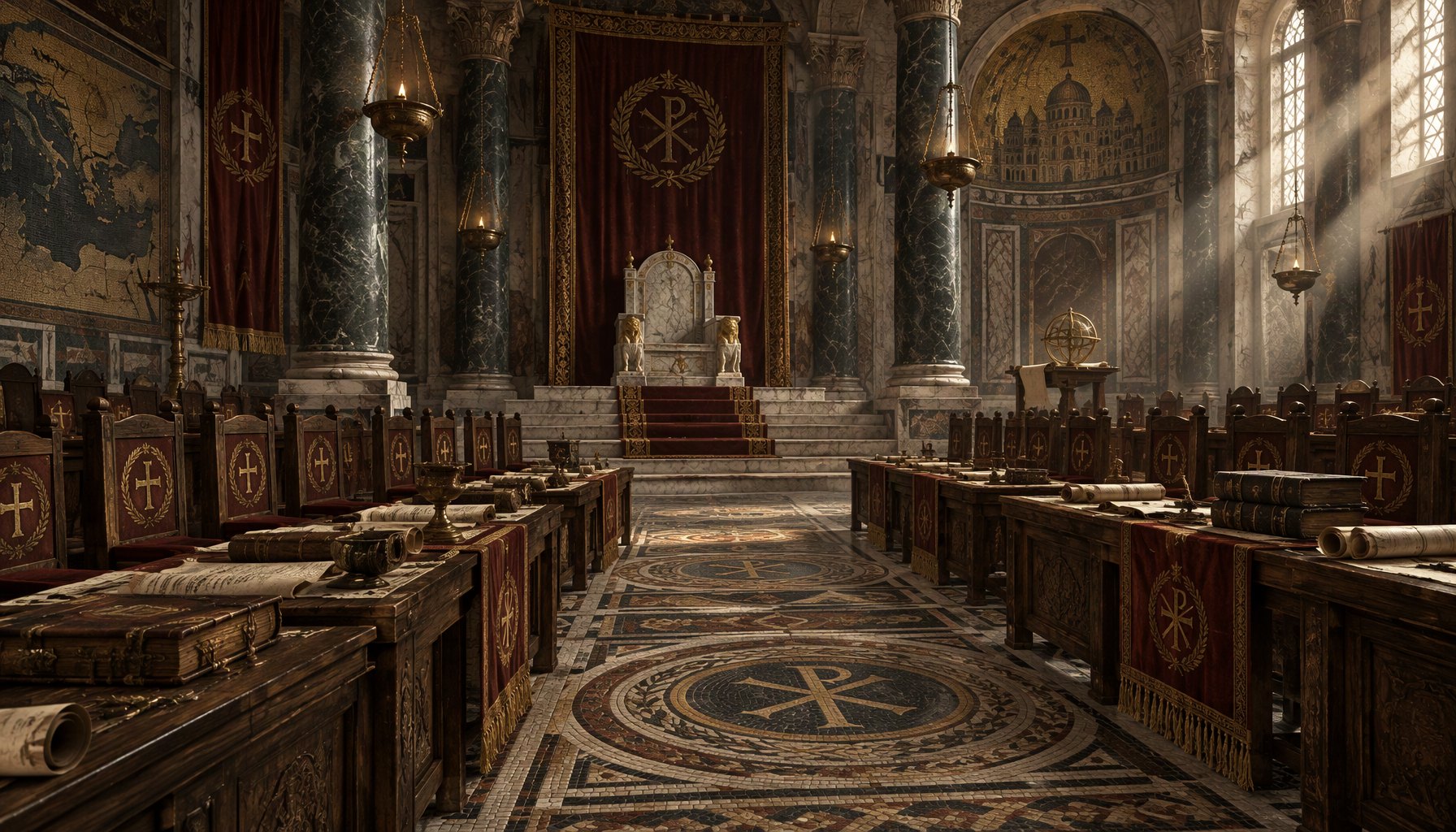
The location chosen was Nicaea, a city in Asia Minor now known as Iznik, Turkey. The city was easily accessible from various parts of the empire and had a palace that could accommodate a large meeting. The council took place from May to August 325.
Who Attended
The number of bishops present is estimated to be between 250 and 318, although church tradition often cites the number 318 based on a biblical story. Most of the participants came from the eastern regions of the empire, as Greek was the main language of discussion. There were also envoys from the West, but their numbers were smaller.
Constantine attended in person and opened the session. He did not lead the theological debate but played an important role in pressing the participants to reach an agreement. According to some records, he submitted documents of accusations made by the bishops and stated that such disputes should be resolved without humiliating either party.
Debate on the Nature of the Son
The core of the debate was whether the Son was of the same substance as the Father. Arius and his supporters rejected the term homoousios, which means "of the same substance" or "of the same essence." They preferred a term that indicated that the Son originated from the Father but was not identical in essence.
The group led by Athanasius, a deacon of Alexandria who later became a bishop, insisted that the salvation of Christians depended on the full equality of the Son with the Father. If the Son was a created being, then He could not fully represent God. This argument ultimately prevailed in the formulation of the creed.
The Nicene Creed
The council produced a statement of belief known as the Nicene Creed. Its text declares belief in one Almighty God the Father, Creator of all that is seen and unseen, and in one Lord Jesus Christ, the Son of God, begotten not made, of the same substance as the Father.
The creed also affirmed the role of the Holy Spirit, although the formulation about the Holy Spirit was only expanded at the Council of Constantinople in 381. In addition, the council established rules for calculating the date of Easter, which later became one of the sources of difference between the traditions of the Eastern and Western churches.
Decisions and Consequences
The council condemned the teachings of Arius and exiled him, although the debate did not end there. In the following decades, support for Arianism resurfaced among the court and some bishops. Constantine himself, at the end of his life, was baptized by Eusebius of Nicomedia, a figure sympathetic to Arius.
The council also issued about 20 canons regulating church discipline, including issues of ordination, the transfer of bishops, and the readmission of those who had apostatized during the persecution. These canons became the basis for church law in the future.
The Legacy of Nicaea
The Council of Nicaea is considered the first ecumenical council in church tradition. Its creed became the basis for the statement of belief still recited in many churches today. The debate about the relationship between the Father, the Son, and the Holy Spirit continued, but the formulation of Nicaea became the main reference point.
For historians, this council also demonstrates the close relationship between religion and political power in late Roman times. Theological decisions were not made in a vacuum; they were influenced by imperial interests, networks of bishops, and long-standing intellectual debates. Nicaea was not the end of the history of Christian doctrine, but one of the most important points in its formation.



Discussion
Comments
Comments are reviewed by an editor before they appear. Include sources when correcting facts.
No comments yet. Be the first to respond to this article.