A Book Without a Reader
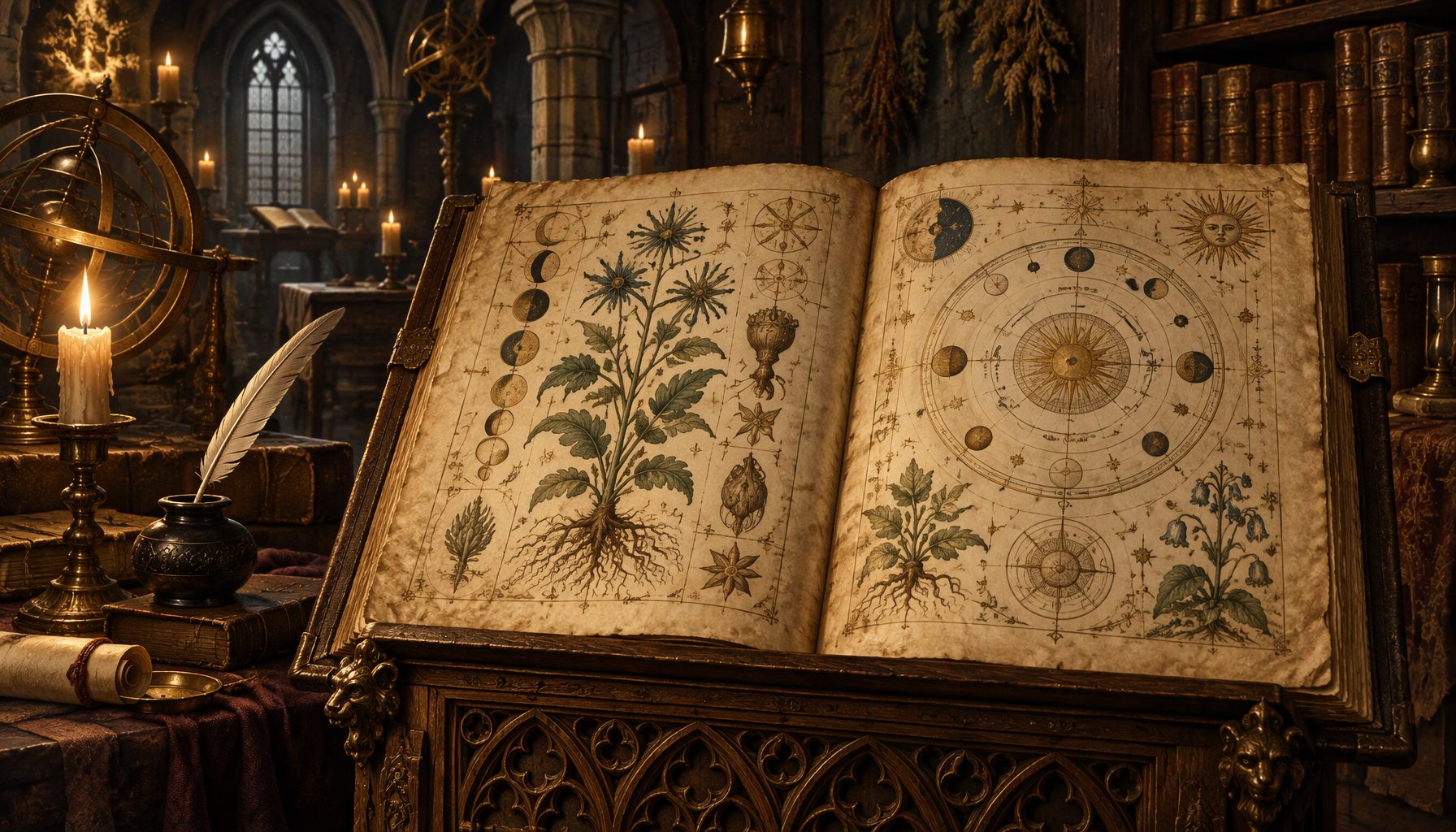
The Voynich Manuscript is one of the most puzzling artifacts in the history of books. This manuscript is kept at the Beinecke Rare Book & Manuscript Library, Yale University, with the code MS 408. It contains more than 200 pages of vellum, filled with unknown script and illustrations of plants, astrological diagrams, and pictures of women in baths. No one has successfully read the text convincingly.
What makes it intriguing is not just the strange writing, but the combination of clear form and unclear content. Its letters flow, its words repeat in certain patterns, and its pages are neatly laid out. All these characteristics make it look like a book that was genuinely written to be read, not random scribbles.
Age and Origin
In 2009, a sample of the vellum from the manuscript was tested with radiocarbon dating by the University of Arizona's laboratory. The results showed that the material dated back to around 1404 to 1438. This test determined the age of the paper, not the writing, but it provided an important starting point: the manuscript was created in the early 15th century, not in ancient Egypt or the early Middle Ages as sometimes claimed.
Its ownership history also provides clues. The name Jacobus Horcicky de Tepenecz, an official in the court of Emperor Rudolf II in Prague, appears on one of the pages. A letter from 1665 mentions that the book was once purchased for Rudolf II. In 1912, bookseller Wilfrid Voynich bought it from the Jesuit college at Villa Mondragone, Italy, and since then the manuscript has been known by his name.
Illustrations That Don't Always Make Sense
The manuscript is divided into several sections based on the images: herbal, astronomy, pictures of women in baths, and a section resembling recipes. Some of the plants depicted cannot be matched with known species. Its circular diagrams resemble star maps or zodiacs, but their arrangement does not exactly match common European astrological traditions.
These inconsistencies have led to many interpretations: a medical book with imaginatively drawn plants, an alchemical encyclopedia, travel notes, or even a literary project deliberately made confusing. So far, no interpretation has been widely accepted.
Efforts to Crack the Code
During World War II and the Cold War, some of the world's best cryptanalysts tried to decipher the Voynich. William F. Friedman, famous for his work in cryptography, spent years studying it without success. A team from the NSA also examined it. Thousands of people around the world have since proposed solutions, ranging from a lost language to an artificial cipher.
Statistical analysis shows that the Voynich text has patterns similar to natural language, such as word length distribution and repetition, but also unusual features. Some researchers speculate that the text was produced by a mechanical process or an artificial language. The hoax hypothesis also exists, but it is difficult to explain the internal consistency and the obvious effort seen in the manuscript.
Why It's Still Fascinating
Voynich is fascinating because it refuses to be solved. In the history of science, cases like this remind us that evidence can be sufficient to confirm something is real, but not enough to explain its meaning. The manuscript is real, its age is measurable, and its content is readable as writing; what is unknown is what it actually says.
Yale provides high-resolution scans so anyone can examine page by page. In an era when almost all ancient texts have been read, Voynich remains a book waiting for its reader.


Discussion
Comments
Comments are reviewed by an editor before they appear. Include sources when correcting facts.
No comments yet. Be the first to respond to this article.