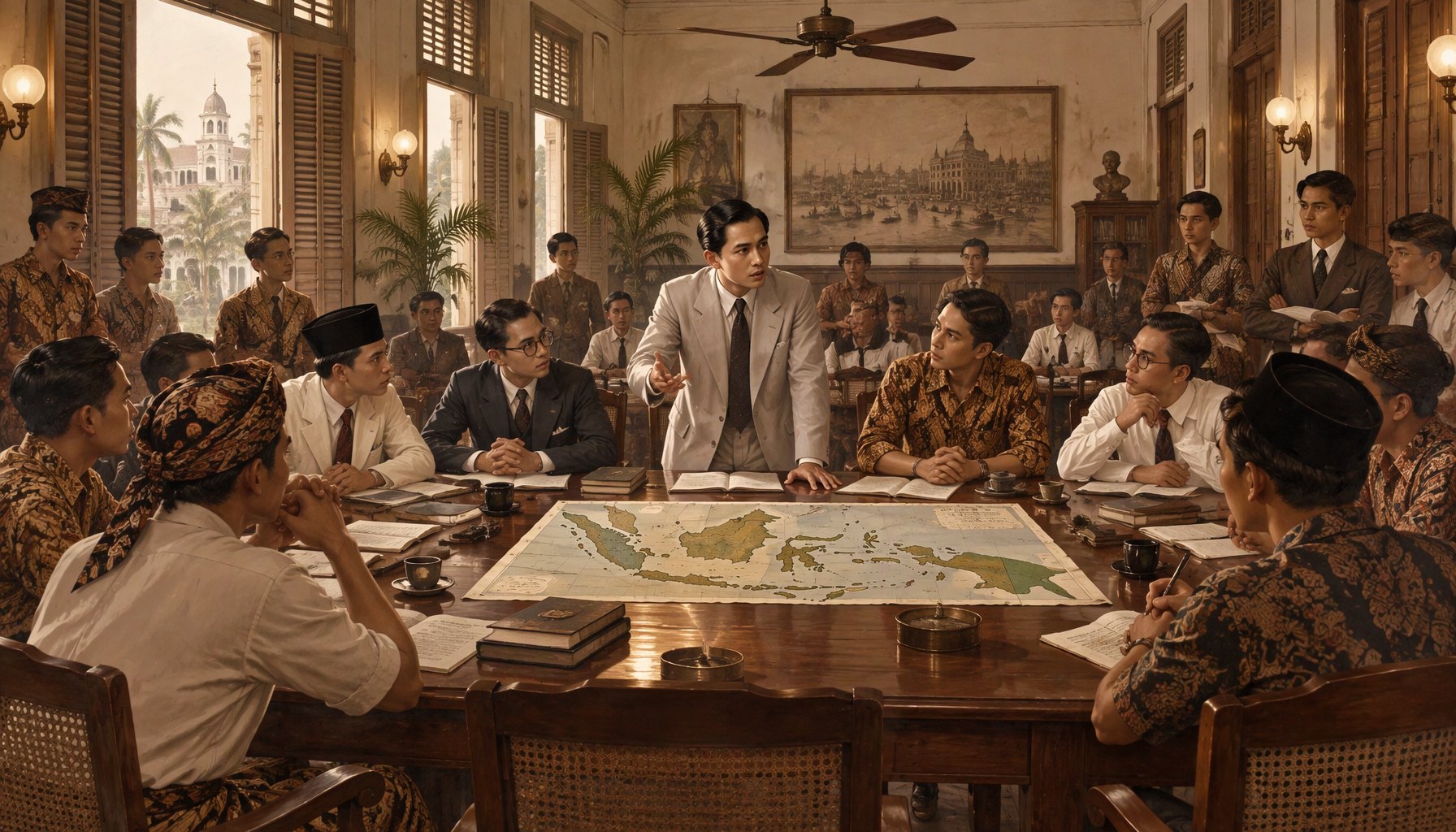
The National Movement Era
At the beginning of the 20th century, political awareness in the Dutch East Indies began to grow. Organizations such as Budi Utomo, Sarekat Islam, and Indische Partij emerged with different demands, but all faced Dutch colonialism. Among the youth, local and student organizations appeared, which later became forums for discussing the future of the nation.
The term "Indonesia" began to be used by intellectuals and activists as a name for the homeland that transcended regional boundaries. However, in the 1920s, regional identities were still very strong. The challenge for the youth was to formulate a shared identity without erasing differences.
Towards the Second Youth Congress
The First Youth Congress in 1926 had shown a desire to cooperate, but had not yet produced a clear formulation. After that, various youth organizations continued to discuss. In 1928, a group of young people prepared the Second Youth Congress with the aim of strengthening unity and formulating shared ideals.
The congress was held on October 27–28, 1928 in Jakarta, which was then called Batavia. The committee involved representatives from various organizations, including Jong Java, Jong Sumatranen Bond, Jong Islamieten Bond, and other youth organizations. Soegondo Djojopoespito was elected as the chairman of the congress.
Three Meetings
The congress took place in three meetings at different locations. The first meeting was held at the Katholieke Jongenlingen Bond building and discussed the importance of unity. The second meeting was held at the Oost-Java Bioscoop building and discussed education and the role of youth. The third meeting was held at the Indonesische Clubgebouw building and became the climax of the congress.
At the third meeting, Muhammad Yamin delivered a speech about the meaning of unity and the future of the nation. The discussion continued until late at night. At the end of the congress, the formulation later known as the Youth Pledge was read and agreed upon by the participants.
Content of the Pledge
The formulation of the Youth Pledge states three things: one outflow of blood for the homeland of Indonesia; one nation, the nation of Indonesia; and upholding the language of unity, the Indonesian language. The three pledges were composed with the spelling of that time, which were later adjusted to modern spelling.
The pledge did not mention any particular religion, ethnicity, or region as the center. On the contrary, it placed Indonesia as a shared identity that transcends differences. The Indonesian language was chosen as the language of unity, although Malay had long been the lingua franca in the archipelago.
Role of Figures and Language
Some key figures in the congress include Soegondo Djojopoespito as chairman, Muhammad Yamin who formulated the text of the pledge, and W. R. Supratman who played the song "Indonesia Raya" with a violin. The song later became the national anthem of Indonesia.
The choice of Indonesian as the language of unity was a strategic decision. Malay had already been used in trade and inter-regional communication, so it was more easily accepted than Javanese or other regional languages with a large number of speakers. This decision helped unite groups with different languages.
Colonial Supervision
The Dutch colonial government monitored the congress and the activities of youth organizations. They were concerned that the meeting would be a step towards independence. However, the congress took place without major repressive actions at that time. Afterwards, pressure on political organizations increased along with the growth of the national movement.
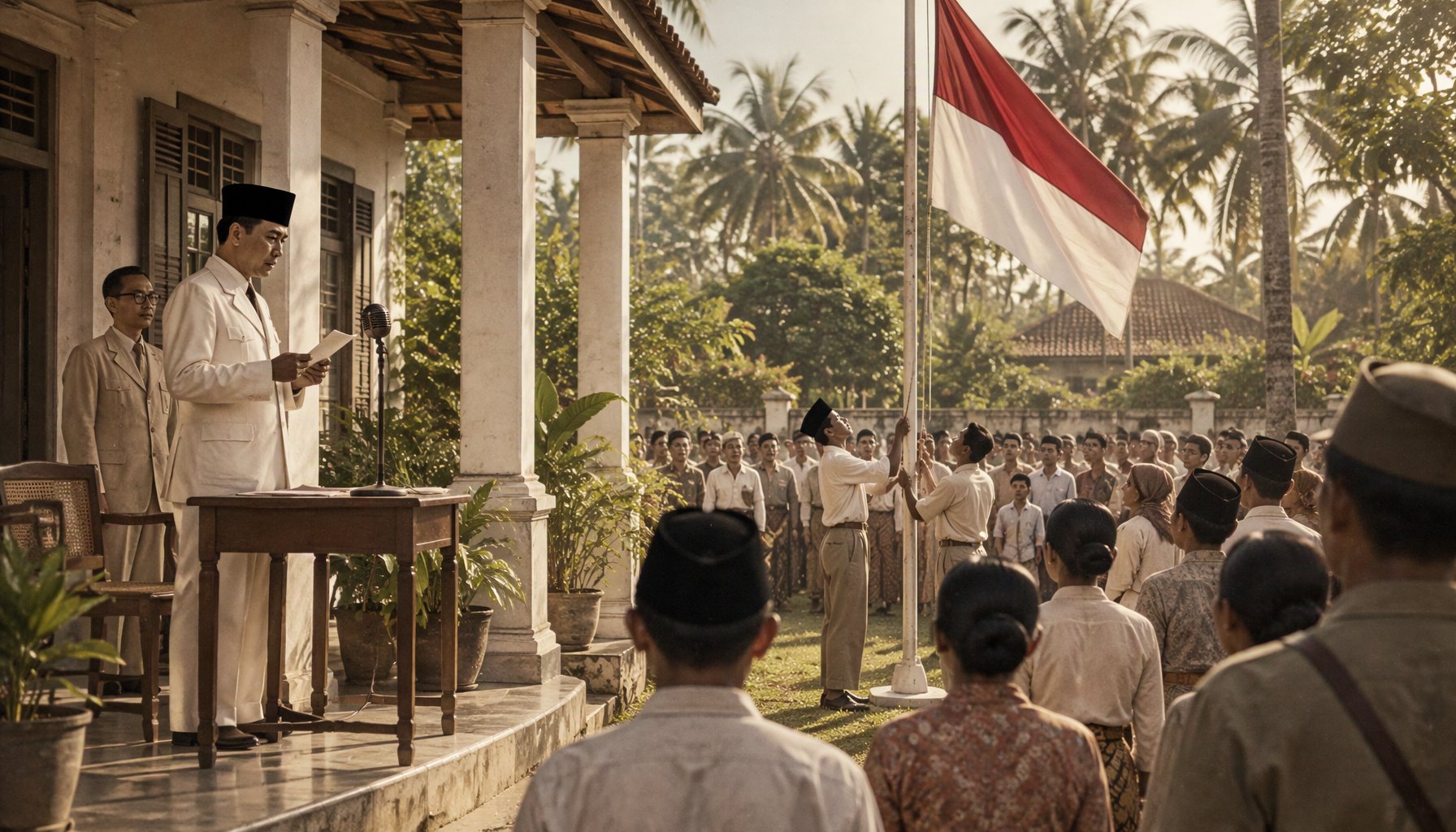
Nevertheless, the Youth Pledge showed that the younger generation was able to formulate a shared agenda. The pledge did not immediately change the colonial structure, but became a symbolic foundation for the subsequent struggle, including the proclamation of independence in 1945.
Text Controversy
The history of the text of the Youth Pledge has several versions. The formulation read in 1928 was later copied and disseminated in various forms. Differences in spelling and word order appeared in subsequent documents. Some researchers emphasize the importance of referring to the congress memorandum and contemporary sources to understand the original text.
The debate about the text does not reduce the meaning of the pledge. What is important is the idea behind it: the willingness to prioritize unity without erasing diversity. Until now, the Youth Pledge is commemorated every October 28 as Youth Pledge Day.
Legacy
The Youth Pledge became one of the milestones in Indonesian history. It introduced the idea of the Indonesian nation as a political community that transcends regional and linguistic boundaries. This idea was not immediately accepted by all groups, but became a reference in education, politics, and culture.
During the independence era, the spirit of the Youth Pledge was often quoted in facing the challenges of unity. However, history also shows that unity is not something that is finished once. It must be nurtured through dialogue, justice, and acknowledgment of differences.

Discussion
Comments
Comments are reviewed by an editor before they appear. Include sources when correcting facts.
No comments yet. Be the first to respond to this article.